
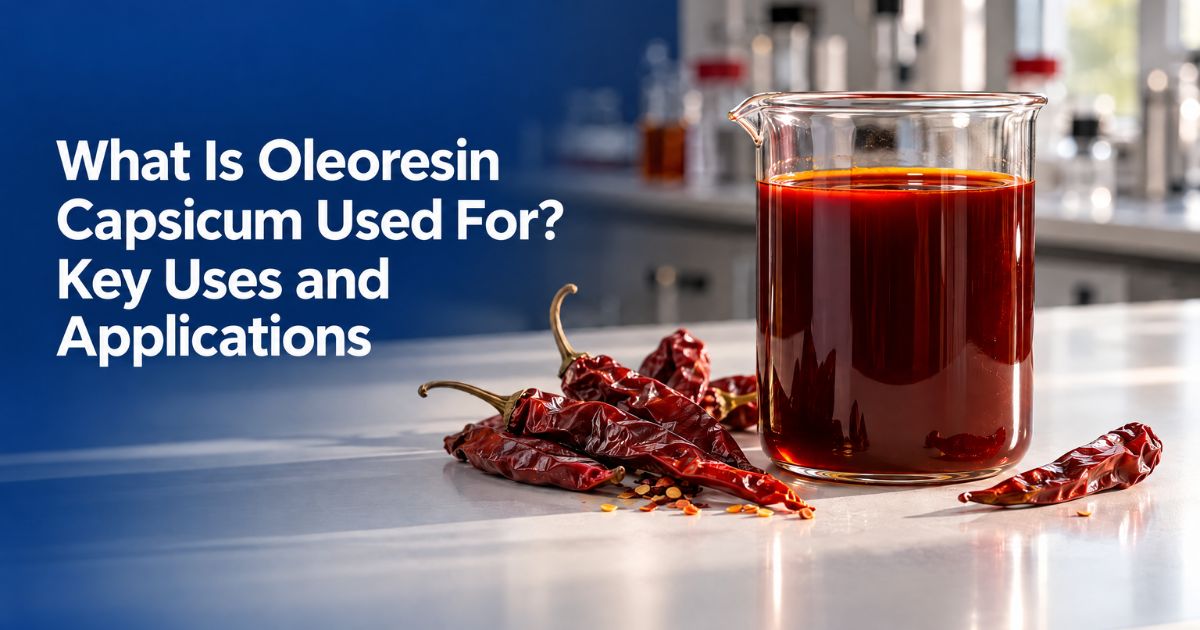
A practical guide to oleoresin capsicum applications across food manufacturing, pharmaceuticals, personal care and other industries.
Oleoresin capsicum turns up in more products than most people realise. The thick, deep-red extract drawn from dried chilli peppers delivers concentrated heat, natural colour and a full chilli flavour profile — all in a form that manufacturers can measure and control far more precisely than raw spice.
If you are new to the ingredient, our detailed guide on oleoresin capsicum covers the extraction process, composition and quality parameters. This article focuses on the practical side: where oleoresin capsicum is actually used, which industries depend on it, and what manufacturers should consider when selecting it for a specific application.
What Is Oleoresin Capsicum Used For?
Oleoresin capsicum (often abbreviated to OC) is used primarily as a natural flavouring agent, colouring agent and source of controlled pungency in food products. Beyond food, it has well-established applications in topical pharmaceutical formulations, nutraceutical supplements, personal-care products and — in its most concentrated forms — in law-enforcement and personal-defence sprays.
The reason it appears across such different sectors comes down to its active compounds. Capsaicinoids (led by capsaicin) are responsible for the heat and much of the biological activity, while natural carotenoid pigments contribute colour. Because the extract concentrates both groups of compounds into a standardised, shelf-stable form, it replaces large quantities of variable raw chilli in industrial formulations.
Major Uses of Oleoresin Capsicum
Food and Spice Products
Food manufacturing is the largest application area for oleoresin capsicum globally. Processors use it for three reasons at once: consistent heat, reliable colour and authentic chilli flavour — without the batch-to-batch variation that comes with ground chilli powder.
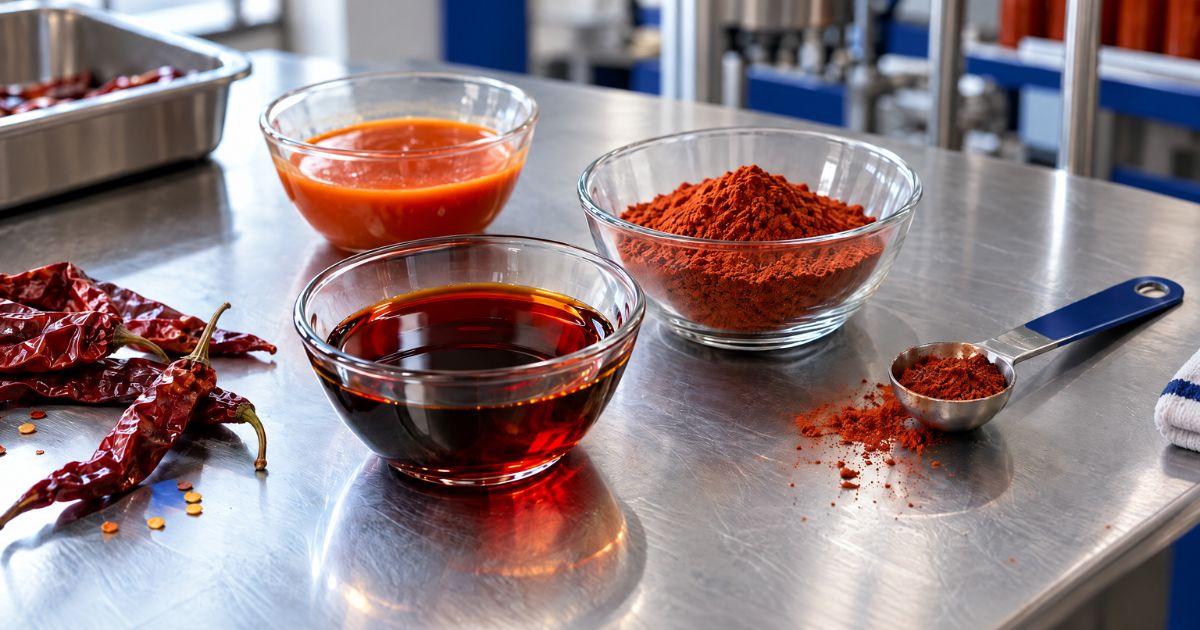
Food manufacturers use oleoresin capsicum for consistent heat, colour and flavour across production batches.
Common food applications include:
Hot sauces and chilli sauces. OC provides the backbone of heat in many commercial hot sauces. It allows manufacturers to hit a target Scoville Heat Unit (SHU) level in every batch, something that is difficult to achieve with whole chillies alone.
Seasonings and spice blends. Both dry blends and wet seasoning pastes use oleoresin capsicum to deliver controlled spiciness. A small quantity of oleoresin replaces a much larger volume of ground spice, reducing raw-material handling and storage costs.
Snack coatings and flavour systems. Chips, extruded snacks and coated nuts frequently rely on oleoresin capsicum dispersed in oil or powder carriers to achieve even heat distribution across every piece.
Processed and ready-to-eat foods. Canned soups, sauces, ready meals, marinades and condiments use OC to maintain a consistent sensory profile at scale.
Meat processing. Sausages, cured meats and marinated products may include oleoresin capsicum for both colour and flavour contribution.
Oleoresin capsicum is listed as Generally Recognised as Safe (GRAS) for use as a flavouring substance in the United States under 21 CFR 182.20, and it is also assessed by the Joint FAO/WHO Expert Committee on Food Additives (JECFA). In India, FSSAI recognises spice oleoresins as permitted food ingredients when produced using approved food-grade solvents.
For a deeper look at how oleoresin capsicum supports spice manufacturing specifically, see our article on oleoresin capsicum in spice formulations.
Pharmaceutical Applications
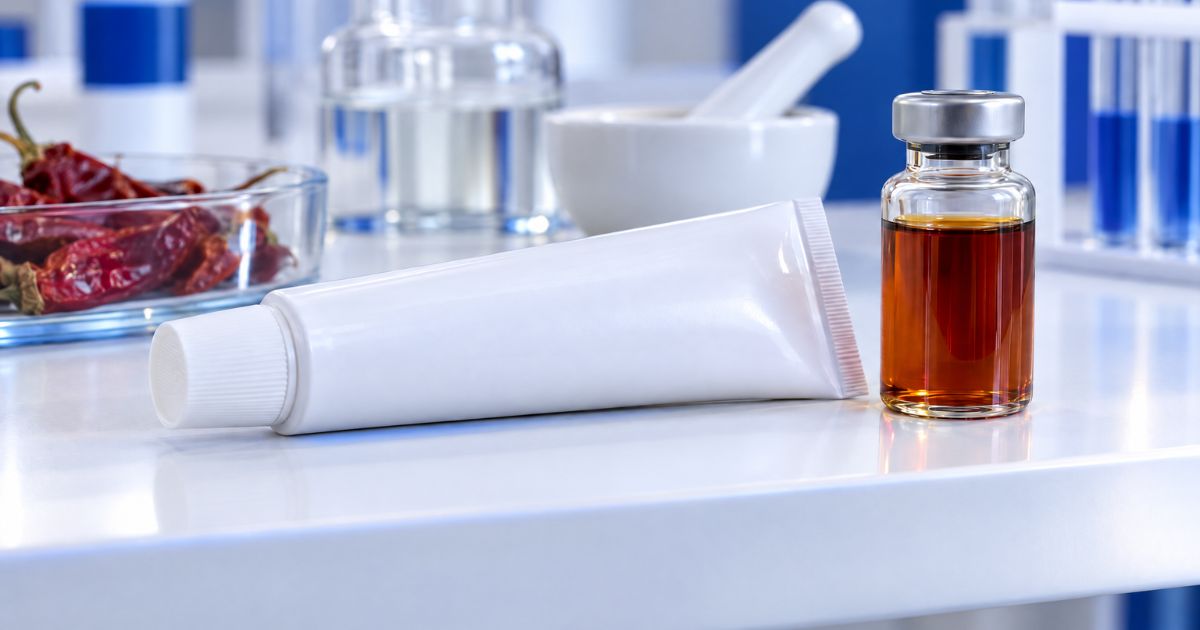
Capsaicin from oleoresin capsicum is used in topical creams and patches for pain relief.
Capsaicin, the primary active capsaicinoid in oleoresin capsicum, has a well-documented role in topical pain-relief formulations. The U.S. FDA recognises capsaicin as a counterirritant for use in over-the-counter (OTC) topical analgesic products.
Topical creams, ointments and patches containing capsaicin are used for symptomatic relief in conditions such as:
- Osteoarthritis and joint pain
- Post-herpetic neuralgia (nerve pain following shingles)
- Diabetic peripheral neuropathy
- Minor muscle strains and sprains
Capsaicin works by interacting with TRPV1 receptors on sensory nerve fibres, initially causing a burning sensation and then reducing the transmission of pain signals over repeated use. Products range from low-concentration OTC creams (0.025–0.1% capsaicin) to prescription-strength patches (8% capsaicin) applied under medical supervision. The Mayo Clinic provides detailed guidance on topical capsaicin use.
Pharmaceutical manufacturers typically require oleoresin capsicum with precisely standardised capsaicinoid content, high purity, and full traceability — including a Certificate of Analysis (COA) for every batch.
Nutraceutical and Dietary Supplement Applications
Capsaicinoids from oleoresin capsicum appear in dietary supplements marketed for metabolic support, thermogenesis and general wellness. Research has explored the role of capsaicin in energy expenditure and fat metabolism, though the evidence base is still developing and specific health claims vary by jurisdiction.
Nutraceutical manufacturers use encapsulated forms of oleoresin capsicum to manage the pungency and improve bioavailability. Microencapsulation techniques — such as spray drying with gum arabic or modified starch — are commonly used to produce capsaicinoid powders suitable for capsule and tablet formulations.
As with any dietary supplement ingredient, manufacturers must ensure that their product claims comply with local regulatory frameworks (such as FSSAI in India, the FDA in the United States, or EFSA in the European Union).
Personal Care and Cosmetic Applications
Capsaicin’s ability to stimulate blood circulation has led to its inclusion in certain personal-care formulations. The most common cosmetic applications include:
- Warming massage oils and balms
- Scalp-care products marketed for hair growth support
- Warming body lotions and creams
These products rely on the localised vasodilation effect of capsaicin — increased blood flow to the applied area creates a warming sensation. Concentrations are typically very low and must comply with cosmetic safety regulations in the target market.
It is worth noting that oleoresin capsicum is a potent irritant at higher concentrations, so formulation expertise and rigorous safety testing are essential for any cosmetic application.
Other Industrial Applications
Defence and personal safety. Concentrated oleoresin capsicum is the active ingredient in pepper sprays and related non-lethal deterrents used by law enforcement and civilians worldwide. This application requires high-SHU material — typically far more concentrated than food or pharmaceutical grades.
Agriculture and pest management. Capsaicin-based formulations serve as natural animal and pest repellents. They are used in seed coatings, cable coatings and perimeter treatments to deter rodents, birds and certain insects without toxic residues.
Animal nutrition. Published research has explored capsicum oleoresin as a feed additive for livestock. Studies on dairy cows, poultry and swine have investigated its potential to improve feed intake and digestive function, though commercial adoption varies by region and regulatory status.
Marine and industrial coatings. Capsaicin-containing coatings have been explored as anti-fouling agents for marine applications, offering a non-toxic alternative to conventional biocide-based paints.
Why Do Manufacturers Choose Oleoresin Capsicum Over Raw Chilli?
For anyone working in product formulation, the advantages of oleoresin capsicum over ground chilli or whole peppers come down to several practical factors:
Standardised pungency. Raw chilli heat varies widely depending on variety, growing conditions, harvest timing and storage. Oleoresin capsicum is standardised to a defined capsaicinoid content or SHU range, giving manufacturers a predictable input.
Concentration and dosing efficiency. A small quantity of oleoresin replaces a large volume of raw spice. This simplifies logistics, storage and in-process handling.
Batch-to-batch consistency. Because the extract is standardised, finished products taste and look the same from one production run to the next — a critical requirement for branded food products.
Extended shelf life. Oleoresin capsicum is more stable than ground chilli, which degrades in colour, flavour and pungency over time when exposed to heat, light and moisture.
Cleaner formulation. Using oleoresin avoids the particulate matter, microbial load and potential contaminants associated with ground spice. This is particularly important in pharmaceutical and nutraceutical manufacturing.
That said, oleoresin capsicum is not a universal replacement for whole chilli or ground spice in every application. Some products require the texture, visual appearance or specific flavour profile of whole or ground chilli. The choice depends on the formulation requirements.
What Should Manufacturers Consider When Selecting Oleoresin Capsicum?
Choosing the right oleoresin capsicum grade depends on the intended application. Key factors include:
Capsaicinoid content and SHU rating. Food applications typically require moderate-pungency material, while defence products need high-SHU concentrates. The specification must match the end product.
Colour contribution. Some applications value the natural red-orange pigments in OC (e.g., certain sauces and seasonings); others need colour-neutral material. Paprika oleoresin may be preferred when colour is the primary requirement without significant heat.
Grade and regulatory compliance. Food-grade, pharmaceutical-grade and cosmetic-grade oleoresin capsicum are manufactured to different purity, testing and documentation standards. Ensure the grade matches your regulatory requirements.
Carrier and solubility. Oleoresin capsicum is oil-soluble by nature. For water-based formulations, emulsified or encapsulated forms may be needed. Discuss carrier options with your supplier.
Certificate of Analysis (COA). A reliable supplier should provide a COA for every batch, including capsaicinoid assay, colour value, solvent residue testing and microbiological results.
Supplier track record. Consistency across multiple orders matters more than the price of a single shipment. Evaluate the supplier’s quality systems, production capacity and technical support capability.
Frequently Asked Questions About Oleoresin Capsicum Uses
Q1. What is oleoresin capsicum mainly used for?
The largest use by volume is in food manufacturing — as a natural flavouring, colouring and heat source in sauces, seasonings, snacks and processed foods. It also has well-established uses in topical pharmaceutical formulations, dietary supplements, personal-care products and defence sprays.
Q2. Is oleoresin capsicum safe to use in food?
Yes. Capsicum oleoresin is recognised as Generally Recognised as Safe (GRAS) by the U.S. FDA when used as a flavouring substance. It is also assessed by the FAO/WHO Joint Expert Committee on Food Additives (JECFA) and recognised by FSSAI in India as a permitted spice oleoresin.
Q3. Why do food manufacturers use oleoresin capsicum instead of chilli powder?
Oleoresin capsicum offers standardised heat, consistent colour, longer shelf life and much higher concentration than ground chilli. A small quantity of oleoresin replaces a large volume of raw spice, reducing storage, handling and batch-to-batch variation.
Q4. Is oleoresin capsicum the same as capsaicin?
No. Capsaicin is one specific compound — the primary capsaicinoid responsible for pungency. Oleoresin capsicum is a whole extract that contains capsaicin along with other capsaicinoids (such as dihydrocapsaicin), natural pigments, flavour compounds and fatty oils.
Q5. What is the difference between oleoresin capsicum and paprika oleoresin?
Both are extracts from Capsicum species, but they serve different purposes. Oleoresin capsicum is extracted from pungent chilli varieties and delivers significant heat. Paprika oleoresin is extracted from mild, high-colour paprika varieties and is used primarily as a natural colouring agent with little to no pungency.
Q6. What industries use oleoresin capsicum?
Food and beverage, pharmaceuticals, nutraceuticals, cosmetics and personal care, defence and law enforcement, agriculture (pest/animal repellents), animal nutrition, and specialty industrial coatings.
Q7. How should manufacturers choose the right oleoresin capsicum grade?
Match the capsaicinoid concentration, colour profile and purity grade to your application. Food-grade, pharmaceutical-grade and cosmetic-grade products differ in testing and documentation requirements. Always request a Certificate of Analysis and evaluate the supplier’s consistency across multiple batches.
Sourcing Oleoresin Capsicum for Your Application
Finding a dependable oleoresin capsicum supplier involves more than comparing prices. Look for a supplier that can provide:
- Consistent quality across orders, supported by batch-specific COAs
- Technical guidance on grade selection and application compatibility
- Flexible packaging and order sizes suited to your production volume
- Regulatory documentation for your target markets
Sakha International, based in Delhi, India, supplies oleoresin capsicum for food, pharmaceutical, nutraceutical, tobacco and defence applications. For product specifications, samples or pricing, contact the team directly through the Sakha International website.
You can also explore our broader range of natural oleoresins and essential oils for related raw materials.


Leave A Comment