

Lemongrass Oil
Sakha International is a Delhi-based manufacturer, wholesaler, distributor and exporter of essential oils and aromatic ingredients, established in 2011. We supply Lemongrass Oil in bulk to importers, manufacturers, formulators and distributors, backed by GC-MS testing and export documentation. Request a quote for current availability, specifications and pricing.
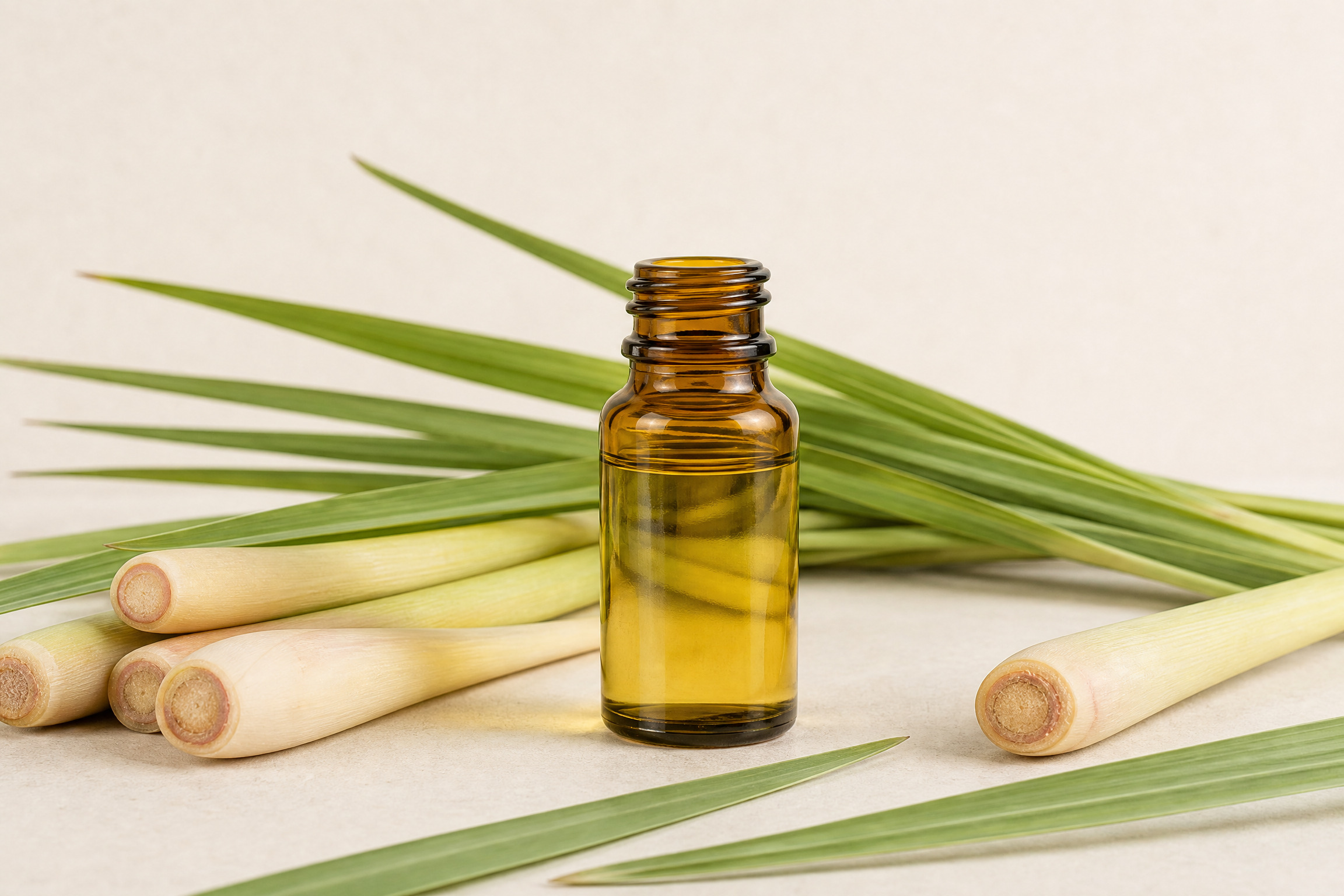
Lemongrass Oil is a citral-rich essential oil steam-distilled from the leaves of Cymbopogon grasses. Valued for its bright, unmistakable lemon-citrus aroma and its high natural aldehyde content, it is one of the most widely traded aromatic oils in the world — a workhorse raw material for soap and detergent fragrances, fine and functional perfumery, cosmetics and personal care, home and air care, and as a natural source of citral for downstream aroma chemistry.
| Parameter | Information |
|---|---|
| Product Name | Lemongrass Oil (Lemongrass Essential Oil) |
| Botanical Name | Cymbopogon flexuosus (East Indian) / Cymbopogon citratus (West Indian) — type to be confirmed per batch |
| Common Names | Lemongrass oil, Cochin grass oil, Malabar grass oil, oil of lemongrass |
| Plant Family | Poaceae (Gramineae) |
| Plant Part | Leaves (grass) |
| Extraction Method | Steam distillation |
| Appearance | Clear mobile liquid; pale yellow to yellowish-brown / amber |
| Aroma | Fresh, strong lemony-citrus, grassy, slightly herbaceous |
| Key Constituents | Citral (geranial + neral), with myrcene, geraniol, limonene, linalool |
| CAS Number | 8007-02-1 |
| Origin | India [exact origin to be confirmed by Sakha International] |
Because of its intensity, natural origin and relatively low cost per kilo, lemongrass oil is a foundational citrus/green building block across the fragrance and cosmetic ingredient supply chain, and an industrial feedstock for isolating citral.
Botanical Source: East Indian vs West Indian Lemongrass
Two principal species are grown for lemongrass oil, and a buyer should always know which one is on offer:
- East Indian lemongrass — Cymbopogon flexuosus. Native to India (also called Cochin or Malabar grass). Its oil is prized in perfumery because it is more readily soluble in alcohol, and it is the type most associated with Indian production.
- West Indian lemongrass — Cymbopogon citratus. Cultivated widely across Central and South America, Africa and Southeast Asia, and more common in culinary contexts.
A third, North Indian type — Cymbopogon pendulus (Jammu lemongrass) — is a cold-tolerant, high-citral variety grown in northern India. All three produce oil of very similar composition, which is why “lemongrass oil” works as a collective trade name; even so, the confirmed botanical name belongs on the specification and COA.
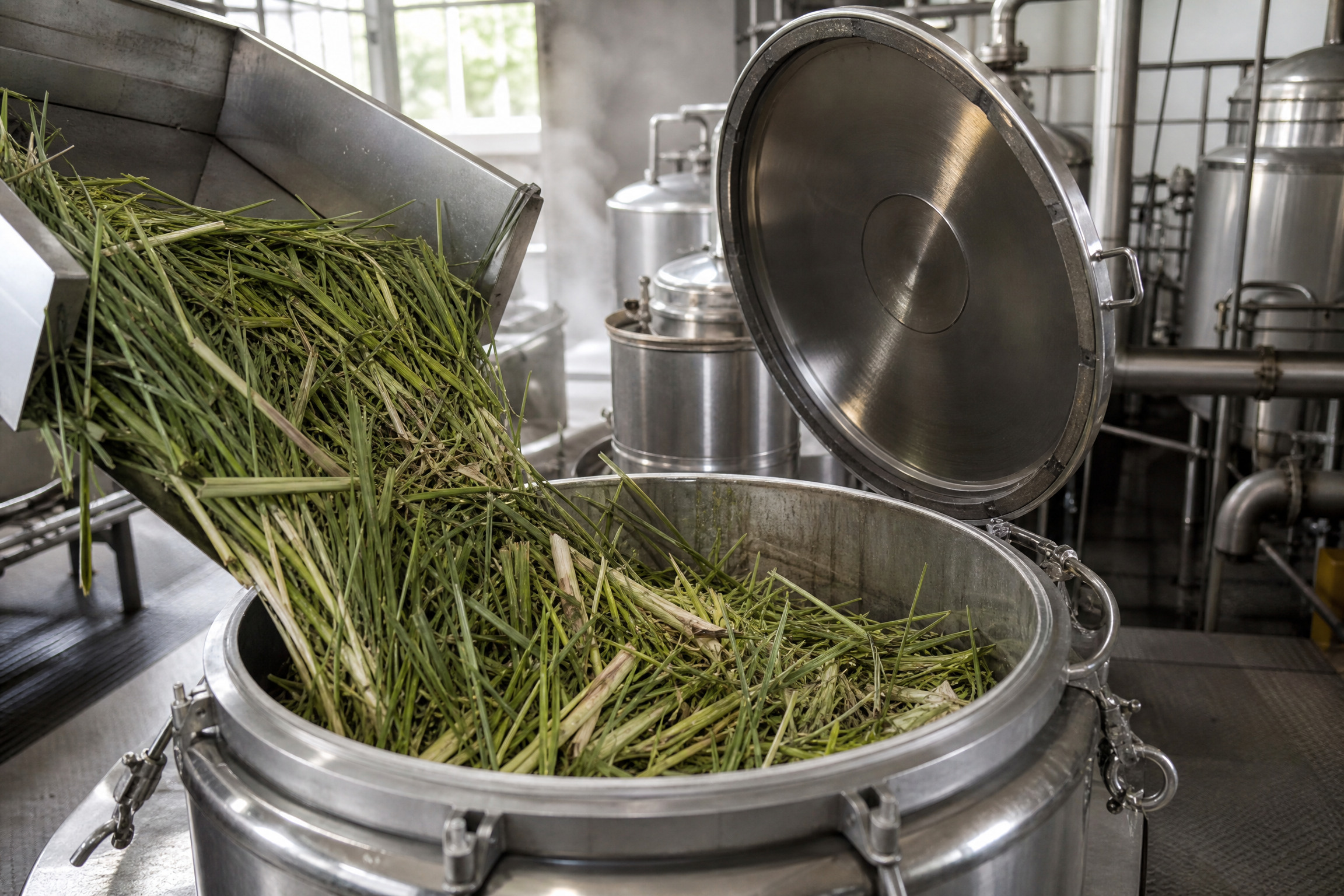
The industry-standard route is steam distillation (or hydrodistillation) of the fresh or partially dried leaves. Steam passes through the chopped grass, volatilising the aromatic compounds; the vapour is condensed and the oil separated from the water phase. Steam distillation also gives lemongrass oil better storage stability than cold-pressed citrus oils. Some producers subsequently rectify or filter the oil to refine colour and clarity.
Note for buyers
The specific process, equipment and any rectification used for Sakha International’s Lemongrass Oil should be confirmed directly with Sakha and are documented on the Technical Data Sheet.
- Aroma: fresh, powerful lemon-citrus with a green, grassy, faintly herbaceous undertone. Functions as a top-to-middle note in fragrance.
- Appearance & colour: clear, mobile liquid ranging from pale yellow to yellowish-brown or amber depending on type, origin and processing.
- Volatility: a volatile, diffusive top note; strong tinctorial and olfactory strength means it is used at low percentages in blends.
- Major constituents: citral (geranial + neral) is dominant, typically in the region of 65–85% total citral in commercial oils, supported by myrcene, geraniol, limonene, linalool, geranyl acetate and β-caryophyllene.
- Citral relevance: citral drives both the lemon odour and the oil’s commercial value; higher citral generally commands a premium and lemongrass oil is a natural feedstock for citral isolation.
- Quality considerations: buyers assess citral %, colour, odour, physical constants and the absence of adulteration or species substitution — all best confirmed by GC-MS and a COA.
Fragrance & Perfumery
A core natural citrus/green note in functional and fine fragrance. Used to build fresh, lemony, “clean” accords and to lift and brighten compositions; East Indian oil’s alcohol solubility makes it convenient for perfumery bases. Also an industrial source of natural citral.
Cosmetics & Personal Care
Incorporated as a natural fragrance and masking ingredient in creams, lotions, toners, deodorants, shampoos and body washes, dosed within IFRA limits and declared as an allergen (citral) where required.
Soaps
A classic, cost-effective soap fragrance — its strength survives the alkaline soap environment well and delivers a recognisable fresh-lemon character in bar and liquid soaps.
Home Care & Air Care
Widely used in surface cleaners, dishwash, detergents, floor care, and air-care formats such as sprays, gels and diffuser bases, where a bright citrus signal communicates freshness and cleanliness.
Aromatic & Aromatherapy Products
Used as an aroma ingredient in candles, incense, diffuser blends and aromatherapy product lines for its uplifting citrus profile. (Described here as scent character only — no therapeutic claims.)
Other Industrial Applications
A recognised natural component in insect-repellent and outdoor formulations, and a raw material for the isolation of citral used downstream in the synthesis of ionones and vitamin A intermediates.
Professional buyers typically evaluate Lemongrass Oil against the following before purchase and on each delivery:
- Identity: confirmed botanical species (C. flexuosus / C. citratus) and INCI/CAS.
- Organoleptic profile: colour, clarity and characteristic citral odour.
- Physical constants: specific gravity / relative density, refractive index and optical rotation (benchmarked to ISO 4718 or ISO 3217 as applicable).
- Composition: GC-MS profile with total citral content and key minor constituents; screening for adulteration and species substitution.
- Documentation: Certificate of Analysis (COA), Safety Data Sheet (SDS/MSDS), Technical Data Sheet (TDS) and, for fragrance use, IFRA / allergen statements.
Sakha International supplies GC-MS tested oils; specific test values and documents are provided per batch on request.
- Store in full, tightly closed containers away from heat, direct sunlight and open flame.
- Use inert, compatible packaging (e.g. HDPE, aluminium or lined steel / amber glass for small volumes); minimise headspace and air exposure to protect citral from oxidation.
- Keep cool and dry; reseal promptly after sampling and follow the SDS for handling, PPE and transport classification.
- Track batch/lot numbers for traceability and observe the shelf life stated on the COA/TDS.
- When sourcing Lemongrass Oil in bulk, buyers should confirm with the supplier:
- Botanical type and origin, and whether the oil is natural, rectified or filtered.
- Guaranteed citral range and full GC-MS/COA for the offered lot.
- Available documentation (SDS, TDS, IFRA/allergen, export papers) and any required regulatory compliance for the destination market.
- Order quantities, packaging options, lead times and logistics/Incoterms.
- Batch-to-batch consistency and the supplier’s ability to hold a stable specification across repeat orders.
Sakha International’s specific MOQ, packaging sizes and supply capacity are confirmed at the quotation stage.
Why Source Lemongrass Oil from Sakha International?
- Established supplier: a Delhi-based manufacturer, wholesaler, distributor, trader and exporter of essential oils and aromatic ingredients since 2011.
- India-based sourcing: working with growers and distillers across India to manage quality from farm to flask.
- Analytical testing: GC-MS tested oils with per-batch documentation to support consistent specifications.
- Export-ready: experience managing batch testing reports, export paperwork and logistics for international buyers.
- Bulk & custom supply: bulk quantities and custom-blend / private-supply discussions for cosmetics, fragrance, soap, home-care and aromatherapy manufacturers.
Any certifications, capacities or claims beyond the above should be confirmed with Sakha International before publishing.
Tell us your target botanical type, citral range, quantity and destination market, and our team will respond with availability, a Certificate of Analysis and a bulk quotation.
Email: sakha.international@yahoo.com | Phone: +91 9810055405, +91 9312455405
1. What is lemongrass oil used for?
It is used mainly as a natural citrus-lemon fragrance ingredient in soaps, detergents, home and air care, cosmetics and personal care, perfumery, and aromatic products, and as an industrial source of citral.
2. What is the difference between East Indian and West Indian lemongrass oil?
East Indian lemongrass oil comes from Cymbopogon flexuosus (native to India, preferred in perfumery for its higher alcohol solubility). West Indian lemongrass oil comes from Cymbopogon citratus, grown widely elsewhere and more common in culinary use. Both are citral-rich with very similar odour.
3. What is the citral content of lemongrass oil?
Commercial lemongrass oils are typically citral-rich, broadly in the 65–85% range depending on species, origin and season. The exact figure for any lot is confirmed by GC-MS on the Certificate of Analysis.
4. How is lemongrass oil extracted?
By steam distillation (or hydrodistillation) of the fresh or partially dried leaves. Some oils are subsequently rectified or filtered.
5. Is lemongrass oil a natural skin sensitiser?
Yes — its high citral content means it is a recognised fragrance allergen. It is used within IFRA limits and declared on-label where required. Always follow the SDS and formulate to regulatory thresholds.
6. What standards apply to lemongrass oil?
ISO 4718 covers oil of Cymbopogon flexuosus (East Indian) and ISO 3217 covers oil of Cymbopogon citratus (West Indian). These define appearance, density, refractive index and citral/carbonyl content ranges.
7. Do you supply lemongrass oil in bulk with a COA and SDS?
Yes. Sakha International supplies GC-MS tested lemongrass oil in bulk to manufacturers, formulators, distributors and exporters, with per-batch documentation available on request.
8. What is the CAS number for lemongrass oil?
The essential oil is CAS 8007-02-1; the key constituent citral is CAS 5392-40-5.