

Rosemary oil has become one of the most talked-about natural ingredients in hair care, and for understandable reasons. A handful of clinical studies suggest it may support hair growth, and the idea of a plant-derived alternative to pharmaceutical treatments appeals to a lot of people.
But the conversation around rosemary oil often moves faster than the evidence behind it. Many sources present a single clinical trial as definitive proof, skip over the limitations, and overstate what rosemary oil can realistically do.
This article takes a different approach. It examines what rosemary essential oil actually is, what the available research does and does not show, how to use it safely, and how to evaluate product quality — whether you are applying it at home or sourcing it as a formulation ingredient for hair-care products.
What Is Rosemary Essential Oil?
Rosemary essential oil is a volatile, aromatic oil extracted from the leaves and flowering tops of Salvia rosmarinus (previously classified as Rosmarinus officinalis). The botanical name was officially updated in 2017 when taxonomic research moved the species into the Salvia genus, though the older name remains widely used in trade and scientific literature.
The oil is most commonly produced through steam distillation. The chemical profile varies depending on the plant’s origin, growing conditions, and the specific chemotype — broadly categorised by dominant compounds such as 1,8-cineole, camphor, or verbenone. This variation matters because different chemotypes have different aromatic characteristics and different biological activity profiles. Two bottles labelled “rosemary essential oil” can have meaningfully different compositions.
Rosemary essential oil should not be confused with two related but distinct products. Rosemary-infused oil is made by steeping rosemary leaves in a carrier oil (such as olive or coconut oil) over time. The resulting product is far less concentrated and has a very different composition. Rosemary extract (sometimes called rosemary oleoresin or rosemary leaf extract) is typically a solvent-extracted concentrate used in food preservation and cosmetic formulation for its antioxidant properties, particularly rosmarinic acid and carnosic acid.
When hair-care research references “rosemary oil,” it usually means the steam-distilled essential oil, and the distinction has practical consequences for both safety and effectiveness.
Potential Benefits of Rosemary Oil for Hair
Interest in rosemary oil for hair centres on a few areas, each with different levels of supporting evidence.
Scalp Circulation and Hair Growth
The most commonly cited potential benefit is the stimulation of scalp blood flow. Rosemary oil contains compounds — including 1,8-cineole and camphor — that appear to have a vasodilating effect when applied topically. Improved microcirculation at the scalp could, in theory, support the nutrient supply to hair follicles and encourage hair growth. This mechanism is part of how minoxidil, the most widely used topical hair-loss treatment, is thought to work.
A small number of clinical studies (discussed in the next section) have investigated this, with cautiously positive results. However, the volume of evidence remains limited, and it would be inaccurate to describe rosemary oil as a proven hair-growth treatment on the basis of what is currently available.
Scalp Health and Comfort
Rosemary oil has demonstrated antimicrobial and anti-inflammatory properties in laboratory settings. These properties may support a healthier scalp environment — reducing flakiness, excess oil, and minor irritation when used in appropriately diluted formulations. In the Panahi et al. (2015) clinical trial, the rosemary group reported less scalp itching than the minoxidil group, which suggests reasonable tolerability for most users.
What Rosemary Oil Cannot Do
Rosemary oil is not a medical treatment for hair loss. It cannot reverse advanced androgenetic alopecia, treat alopecia caused by autoimmune conditions, thyroid disorders, or nutritional deficiencies, or compensate for underlying health issues. People experiencing sudden, persistent, or unexplained hair loss should seek medical evaluation rather than relying on any cosmetic ingredient.
What Does Research Say About Rosemary Oil and Hair Growth?
The most commonly cited evidence comes from a small number of studies. Below is a summary of the key findings, followed by an honest assessment of their limitations.
| Research | What Was Investigated | Main Finding | Important Limitation |
| Panahi et al. (2015), SKINmed 13(1):15–21 | Rosemary oil vs 2% minoxidil in 100 male patients with androgenetic alopecia over 6 months | No statistically significant difference in hair count between groups at 3 or 6 months; both groups showed improvement at 6 months; rosemary group experienced less scalp itching | Small sample (100), single-blind, males only, compared to 2% minoxidil (not the more commonly prescribed 5%), single-centre study, no placebo arm |
| Murata et al. (2013), Phytotherapy Research 27(2):212–7 | Topical rosemary leaf extract in mice with testosterone-induced hair-loss interruption | Rosemary extract improved hair regrowth and showed inhibitory activity against 5-alpha reductase (the enzyme involved in androgenetic alopecia) | Animal study — results do not directly translate to human outcomes; used rosemary leaf extract, not essential oil |
| Hay et al. (1998), Archives of Dermatology 134(11):1349–52 | Aromatherapy blend (thyme, rosemary, lavender, cedarwood in carrier oils) for alopecia areata | The essential oil group showed statistically significant improvement compared to the carrier-oil-only control group | Used a blend of four oils — the contribution of rosemary alone cannot be isolated; small sample; alopecia areata is a different condition from androgenetic alopecia |
A Closer Look at the Panahi et al. (2015) Study
This is the trial most frequently cited to support claims that rosemary oil matches minoxidil for hair growth. Here is what the study actually found :
One hundred men with androgenetic alopecia (pattern hair loss) were randomly assigned to apply either rosemary oil or 2% topical minoxidil twice daily for six months. Hair counts were assessed using standardised photographs at baseline, three months, and six months.
At three months, neither group showed a statistically significant change in hair count. At six months, both groups showed significant improvement compared to their own baselines. There was no statistically significant difference between the rosemary and minoxidil groups at any time point, and the rosemary group reported less scalp itching.
The study provides genuine evidence that rosemary oil may have a clinically meaningful effect on pattern hair loss. However, several limitations prevent it from being treated as proof of equivalence with minoxidil :
First, the study compared rosemary oil against 2% minoxidil, which is the weaker of the two commonly available concentrations. The 5% formulation is what most dermatologists recommend and what most over-the-counter products contain. Research has shown that 5% minoxidil is more effective than 2%, so the comparison was against a lower bar than what many readers might assume.
Second, the sample was small (100 participants), the design was single-blind, and no placebo group was included. Without a placebo arm, it is difficult to determine how much of the observed improvement in either group was due to the treatment itself versus natural variation, regression to the mean, or the act of massaging the scalp twice daily.
Third, this remains a single trial conducted at a single centre. It has not been replicated in a larger, multi-centre study with an independent placebo control — the standard required before a treatment can be considered reliably established.
The honest interpretation: rosemary oil shows promise, but the evidence is preliminary. It is not yet established as a standard treatment for hair loss, and it should not be presented as equivalent to approved therapies without qualification.
How to Use Rosemary Oil for Hair
Rosemary Essential Oil With a Carrier Oil
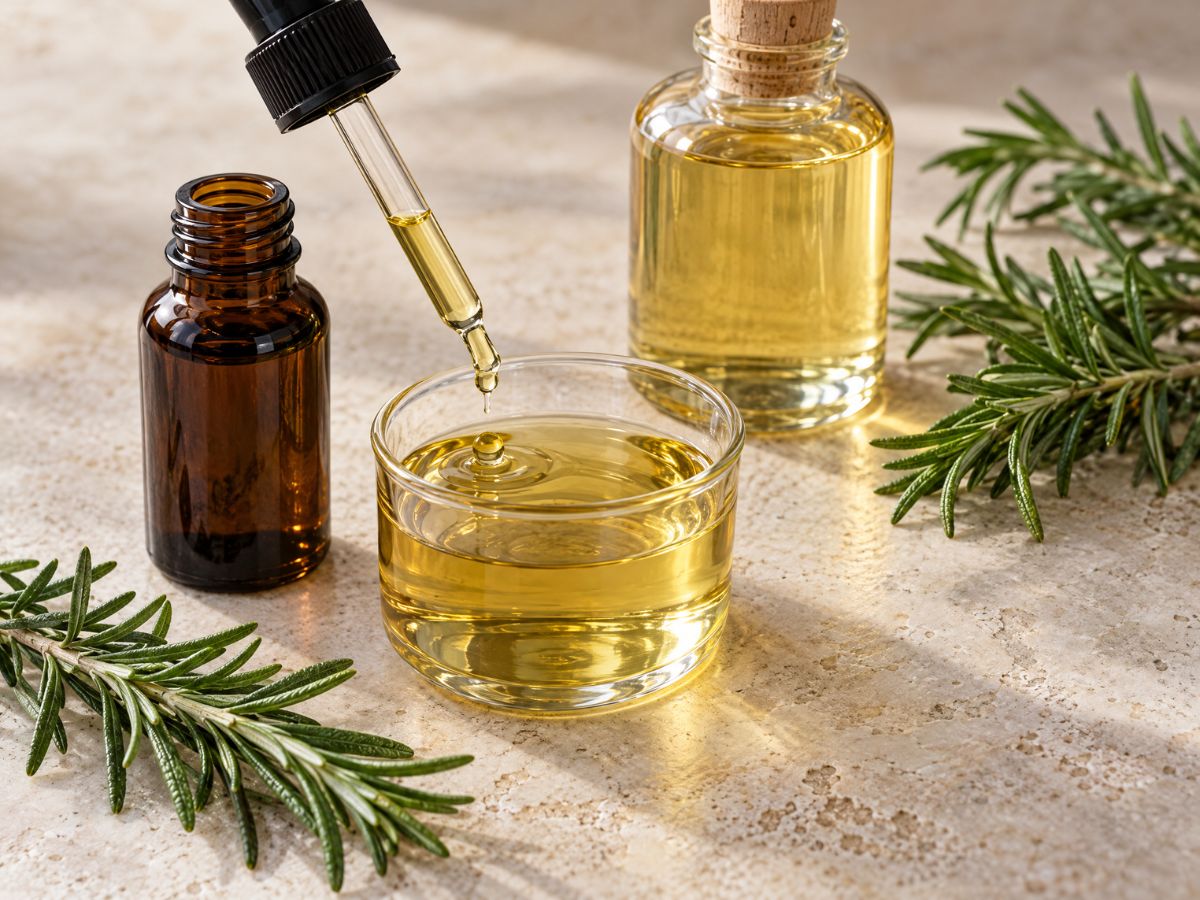
Rosemary essential oil is highly concentrated and should not be applied undiluted to the scalp. Direct application of neat essential oil can cause irritant contact dermatitis, redness, and burning.
The standard approach is to dilute the essential oil in a carrier oil before application. Commonly used carrier oils include jojoba oil (which has a composition similar to the skin’s natural sebum), coconut oil, sweet almond oil, and argan oil. A general guideline for topical scalp application is a 1–3% dilution, which translates to approximately 3–9 drops of essential oil per tablespoon (15 mL) of carrier oil. However, optimal concentrations have not been established through definitive research, and individual skin tolerance varies.
Start with a lower concentration, perform a patch test on a small area of skin (such as the inner forearm) 24–48 hours before applying to the scalp, and increase gradually only if no irritation occurs. Follow the instructions on any specific product you purchase, as formulations differ.
Rosemary Oil in a Hair-Care Routine
In the Panahi et al. (2015) study, participants applied rosemary oil to the scalp twice daily. However, this was a structured clinical setting, and the protocol may not be practical or necessary for everyone. Many users apply a diluted rosemary oil blend 2–3 times per week as a scalp treatment before washing, or add a few drops to a regular shampoo or conditioner.
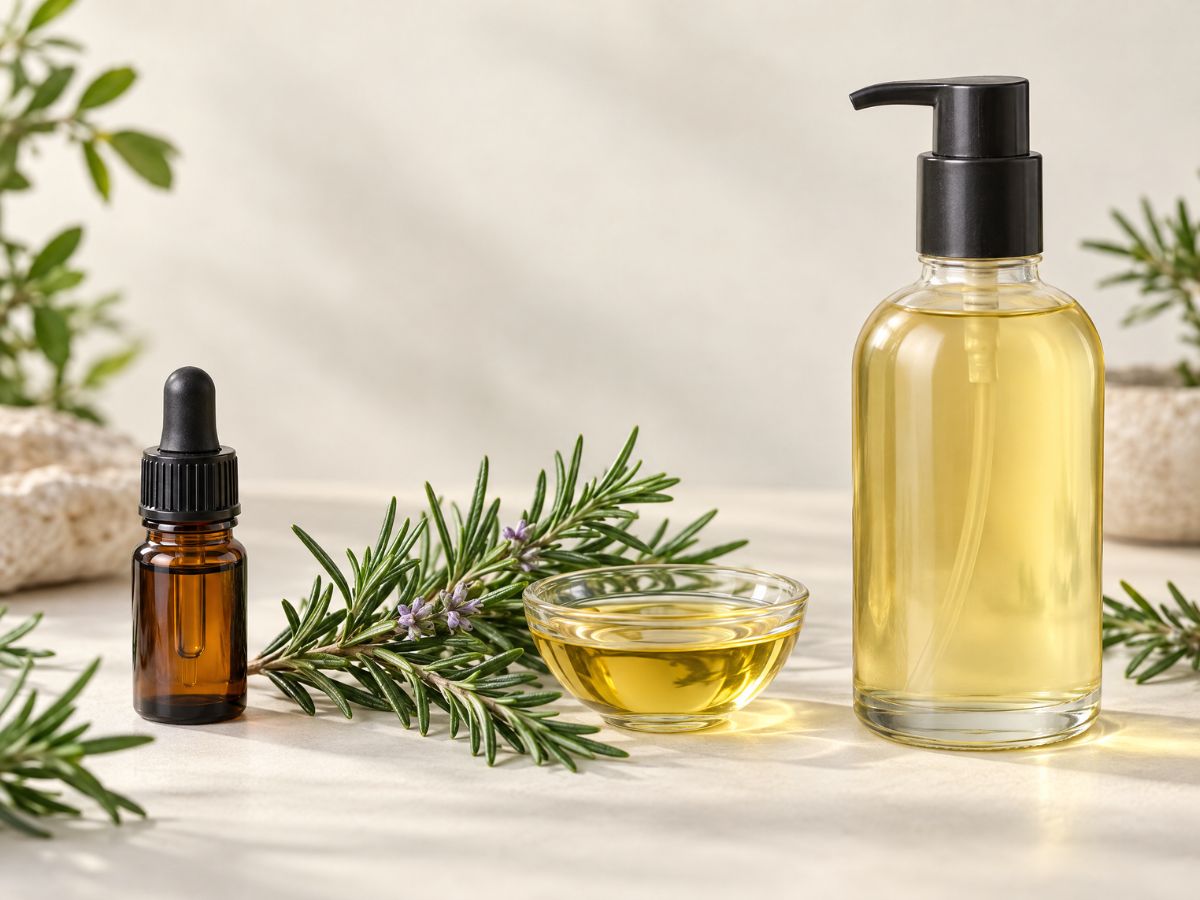
Ready-to-use rosemary hair oils and serums are formulated at concentrations intended for direct application and should be used according to their label directions. The dilution steps above apply specifically to pure rosemary essential oil, not to pre-diluted commercial products.
How Long Does Rosemary Oil Take to Show Results?
In the Panahi et al. trial, measurable improvement in hair count appeared at six months, not at three months. This is consistent with the biology of the hair growth cycle — the hair follicle goes through growth (anagen), regression (catagen), and resting (telogen) phases, and meaningful changes in hair density typically take several months to become visible.
There is no evidence-based guarantee of a specific timeline. Some people may observe changes sooner; others may see none. Anyone hoping for meaningful results should be prepared for consistent use over at least four to six months before drawing conclusions — and should understand that not everyone will respond.
Rosemary Essential Oil vs. Rosemary Hair Oil
This is a common source of confusion. The two products are fundamentally different and should be used differently.
| Feature | Rosemary Essential Oil | Ready-to-Use Rosemary Hair Oil |
| Composition | Concentrated volatile compounds extracted by steam distillation | Rosemary essential oil or extract pre-blended with carrier oils and sometimes other ingredients |
| Concentration | Very high — 100% essential oil in the bottle | Low — essential oil typically makes up a small percentage of the total formulation |
| Dilution needed? | Yes — must be diluted in a carrier oil before skin application | No — designed for direct application at safe concentrations |
| Intended use | Raw ingredient for DIY blending, aromatherapy, or cosmetic formulation | Finished product for direct hair and scalp application |
| Label and instructions | Typically sold with safety data; usage instructions vary | Should include application directions, ingredients list, and usage frequency |
| Regulatory context | Sold as a raw material or aromatherapy product | Sold as a cosmetic product with formulation and labelling requirements |
If you are buying rosemary oil specifically for hair care, check whether the product is a concentrated essential oil that requires dilution or a ready-to-use formulation. The label and ingredients list will tell you.
Safety Precautions When Using Rosemary Oil for Hair
Skin irritation and allergic reactions : Undiluted rosemary essential oil can cause contact dermatitis — redness, itching, burning, and in some cases blistering. Even diluted preparations can irritate sensitive skin. Discontinue use and seek medical advice if irritation occurs.
Patch testing : Before applying any rosemary oil preparation to the scalp, test a small amount on the inner forearm and wait 24–48 hours. Note that a negative patch test does not guarantee tolerance on all skin areas or over prolonged use — it reduces but does not eliminate risk.
Eye contact and ingestion : Keep essential oils away from the eyes and mucous membranes. Rosemary essential oil should not be ingested — undiluted essential oils can be toxic when swallowed and can cause serious adverse effects.
Pregnancy and specific medical conditions : Pregnant and breastfeeding women are generally advised to avoid rosemary essential oil. People with epilepsy, high blood pressure, or those taking blood-thinning medication should consult a healthcare professional before using rosemary oil topically.
When to see a doctor : Rosemary oil is a cosmetic ingredient, not a diagnostic or therapeutic tool. If you are experiencing sudden, persistent, patchy, or unexplained hair loss, consult a dermatologist or healthcare professional. Hair loss can be a symptom of underlying conditions that require medical assessment.
How to Choose Quality Rosemary Essential Oil
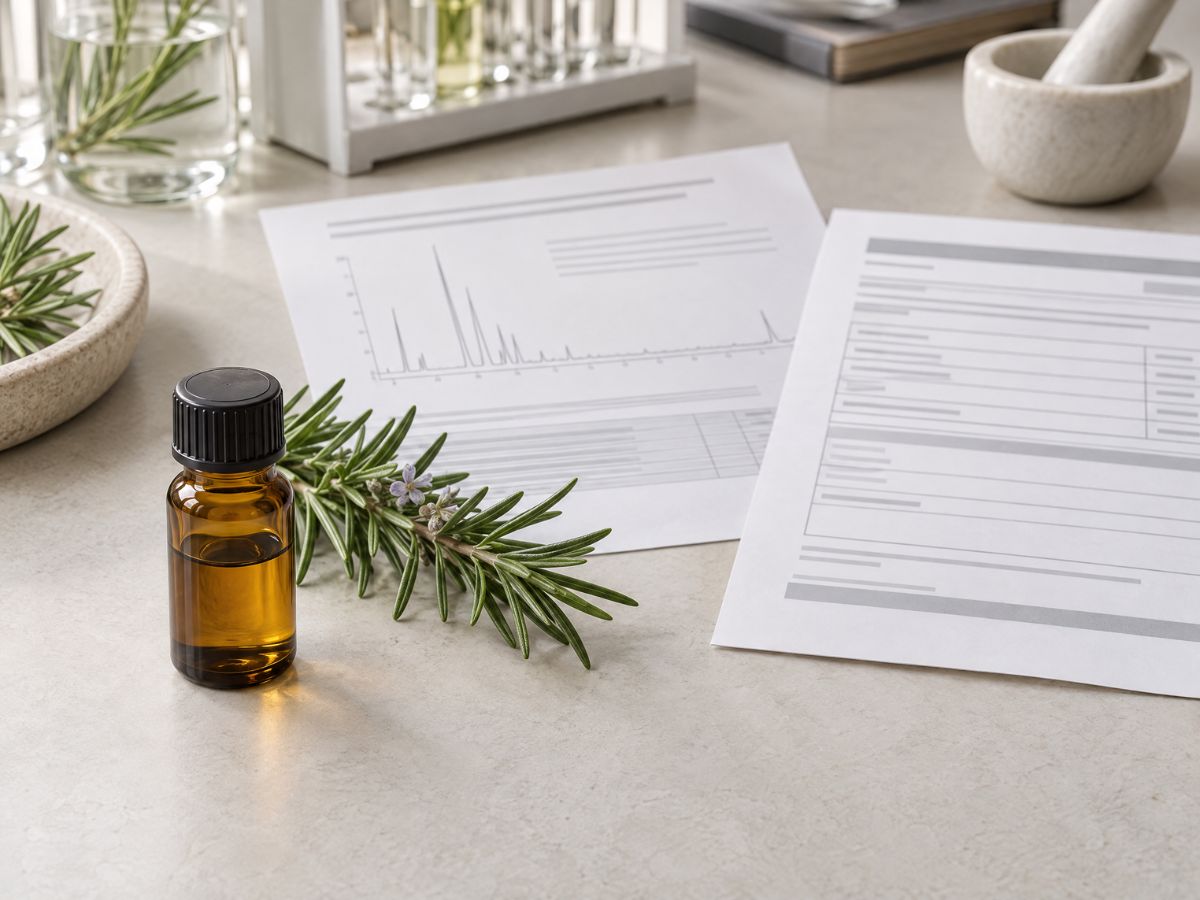
Whether you are selecting rosemary oil for personal use or evaluating it as a formulation ingredient, a few quality markers are worth understanding.
Botanical identity : The label should identify the oil as Salvia rosmarinus (or Rosmarinus officinalis) and specify the plant part used (leaf, flowering tops) and the extraction method (typically steam distillation).
Country of origin : Rosemary is cultivated commercially in Spain, Morocco, Tunisia, Turkey, and India, among other regions. Origin affects the chemotype and compositional profile.
GC-MS analysis : Gas chromatography-mass spectrometry (GC-MS) testing identifies the major chemical components in an essential oil batch. This is the standard analytical method for verifying composition and detecting adulteration with cheaper synthetic compounds. Professional buyers should request a GC-MS report for each batch.
Certificate of Analysis (CoA) and Safety Data Sheet (SDS) : A CoA confirms that a specific batch meets defined specifications. An SDS provides safety, handling, and storage information. These documents are standard in B2B essential oil trade and are a minimum expectation for ingredient purchasers.
Storage and shelf life : Essential oils degrade with exposure to heat, light, and air. Properly stored rosemary oil (in dark glass, tightly sealed, away from heat) typically has a shelf life of one to three years, though this varies by supplier and storage conditions.
A CoA or GC-MS report demonstrates batch-level quality and composition. It does not, on its own, guarantee safety for every application or compliance with every market’s cosmetic regulations — those assessments depend on the finished product and its intended use.
Rosemary Oil for Commercial Hair-Care Formulations
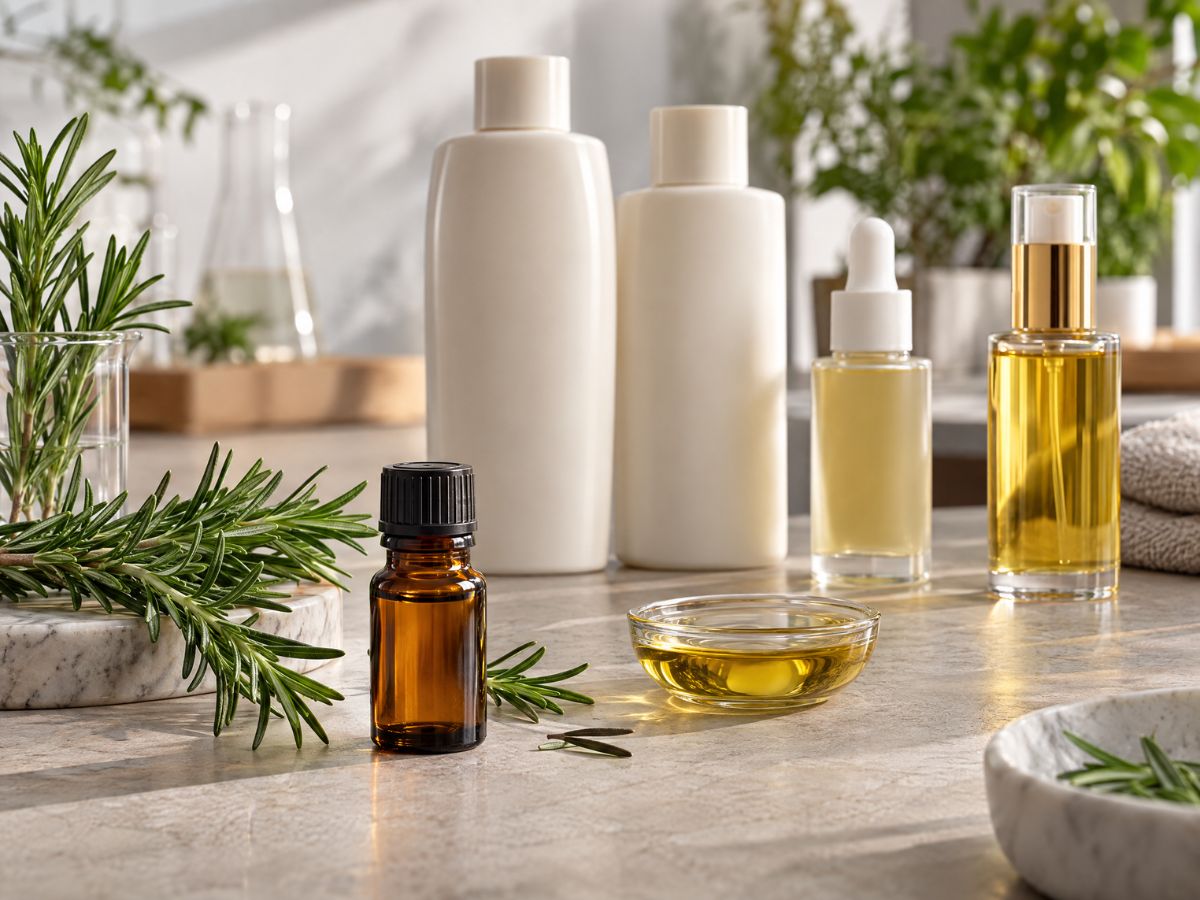
For cosmetic manufacturers, hair-care brands, and ingredient buyers, rosemary essential oil is a functional and commercially appealing raw material. Consumer interest in rosemary for hair care has grown substantially, and products featuring rosemary oil — shampoos, scalp serums, hair oils, and treatment masks — continue to gain shelf space.
Formulators evaluating rosemary essential oil for hair-care products should consider several practical factors :
Ingredient consistency : Batch-to-batch variation in essential oil composition can affect both the scent profile and the functional positioning of a finished product. Suppliers who provide GC-MS reports and consistent sourcing help maintain formulation stability across production runs.
Compatibility and stability : Rosemary essential oil needs to remain stable in the product base — whether that is a surfactant system (shampoo), an emulsion (conditioner, serum), or an oil blend (hair oil). Stability testing and compatibility assessment are standard formulation steps.
Regulatory compliance : The finished product must comply with the cosmetic regulations applicable to its target market — in India, the Cosmetics Rules, 2020 under the CDSCO; in the EU, the Cosmetics Regulation (EC) No 1223/2009; and equivalent frameworks in other markets. Compliance is assessed at the finished-product level, not the ingredient level alone.
Sakha International lists rosemary oil in its essential oils catalogue and supplies raw materials — including essential oils, carrier oils, and functional ingredients — to the personal care industry from its base in Delhi, India. Manufacturers and ingredient buyers interested in sourcing rosemary essential oil in bulk can review the essential oils range or contact Sakha International to discuss specifications, documentation, and supply requirements.
FAQs :
Q1. Is rosemary oil good for hair?
Rosemary oil shows potential for supporting scalp health and may contribute to hair growth based on limited clinical evidence. It is not a guaranteed treatment for hair loss, and individual results vary. It is best understood as a cosmetic ingredient with promising but preliminary research behind it.
Q2. Can rosemary oil help with hair growth?
One clinical trial (Panahi et al., 2015) found that rosemary oil performed comparably to 2% minoxidil after six months in men with pattern hair loss. The evidence is encouraging but comes from a single, small study, and the comparison was against the weaker formulation of minoxidil. Larger studies are needed before rosemary oil can be described as a reliable hair-growth treatment.
Q3. Can rosemary essential oil be applied directly to the scalp?
Pure rosemary essential oil should not be applied undiluted. It must be diluted in a carrier oil (typically at a 1–3% concentration) before scalp application to reduce the risk of skin irritation or contact dermatitis. Ready-to-use rosemary hair products are already formulated at safe concentrations.
Q4. Is rosemary essential oil the same as rosemary hair oil?
No. Rosemary essential oil is a concentrated steam-distilled extract that requires dilution. Rosemary hair oil is a ready-to-use product that combines rosemary essential oil or extract with carrier oils and other ingredients at safe concentrations for direct application.
Q5. How often should rosemary oil be used for hair?
The clinical trial used twice-daily application. In practice, many people apply a diluted rosemary oil treatment 2–3 times per week. The optimal frequency has not been established through definitive research. Follow product-specific instructions for ready-to-use formulations.
Q6. How long does rosemary oil take to show results?
In the Panahi et al. study, measurable hair-count improvement appeared at six months, not at three months. The hair growth cycle means that any topical treatment typically needs several months of consistent use before changes become visible. Not everyone will see results.
Q7. Can rosemary oil replace medical hair-loss treatments?
Rosemary oil has not been approved as a medical treatment for hair loss in any major regulatory jurisdiction. It should not replace minoxidil, finasteride, or other treatments prescribed by a dermatologist. People with clinically significant hair loss should seek professional evaluation before relying on any essential oil.
Q8. What should formulators look for when sourcing rosemary essential oil for hair-care products?
Key factors include correct botanical identification, a GC-MS report for each batch, a Certificate of Analysis (CoA), batch consistency, appropriate storage and shelf-life documentation, and a supplier who understands cosmetic ingredient requirements. Sakha International supplies rosemary oil and other essential oils in bulk from India and can provide relevant documentation.
Conclusion
Rosemary essential oil occupies an interesting position in hair care — it is backed by genuine, if limited, clinical evidence, widely used in traditional and cosmetic contexts, and the subject of active consumer interest. The available research suggests it may support hair growth and scalp health, particularly in cases of androgenetic alopecia, but the evidence does not yet support treating it as a proven equivalent to established treatments.
For consumers, the practical takeaway is that rosemary oil is worth considering as part of a hair-care routine, provided it is used safely, expectations are realistic, and it is not substituted for medical advice when needed. For cosmetic manufacturers and ingredient buyers, rosemary essential oil is a commercially relevant and consumer-appealing raw material — one that rewards careful sourcing, batch-level quality documentation, and formulation expertise.
To explore rosemary essential oil and other ingredients for hair-care formulations, visit Sakha International’s essential oils range or get in touch to discuss your sourcing requirements.




Leave A Comment