
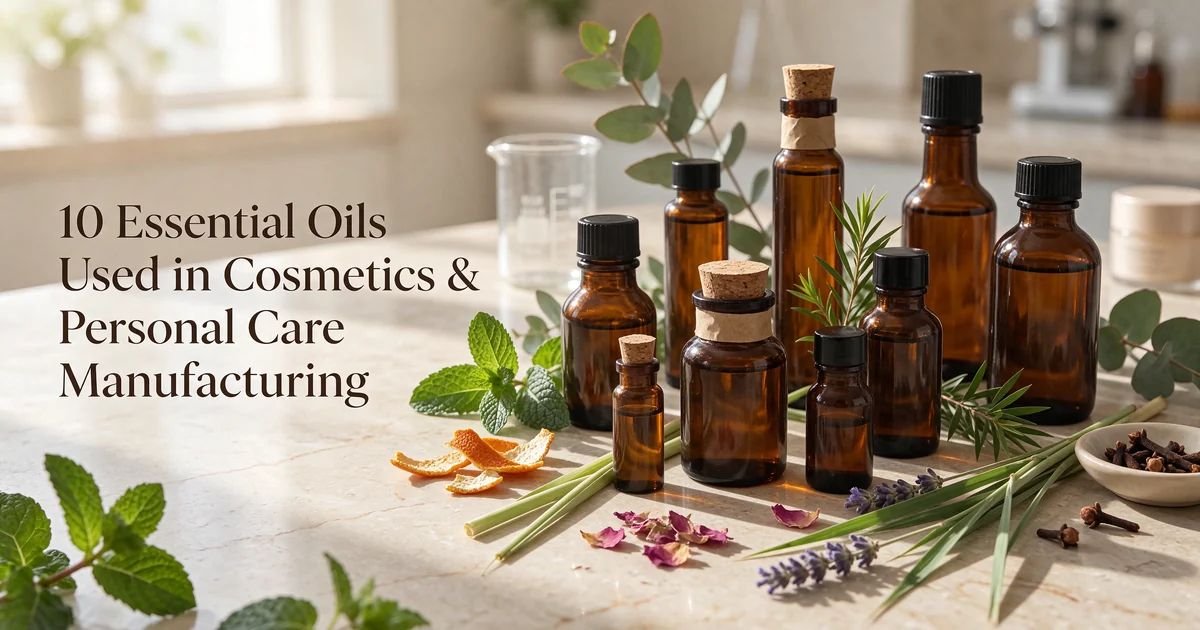
Essential oils have been part of cosmetic and personal care formulations for centuries. From the rose attars of ancient perfumery to modern cold-pressed citrus oils in skincare serums, these concentrated plant extracts continue to serve real functional roles in product development – as fragrance components, as sources of specific bioactive compounds, and as natural alternatives to certain synthetic ingredients.
For cosmetic manufacturers, skincare brands and personal care formulators, selecting the right essential oils is both a creative and a technical decision. Each oil carries a distinct chemical profile that determines its aroma character, its compatibility with other formulation ingredients, its stability under storage, and its safety profile when applied to skin.
This guide covers ten essential oils that are widely used across cosmetics and personal care manufacturing. For each oil, we outline the botanical identity, typical aroma profile, relevant cosmetic applications, key formulation considerations and important safety notes. We also address the practical side of sourcing – quality documentation, supplier evaluation, storage and packaging – to help procurement managers and formulators make informed purchasing decisions.
Sakha International supplies several of the essential oils discussed below in bulk quantities from India. Where an oil is part of our verified product range, we have noted this. Where we have included an oil based on its broad industry relevance rather than confirmed catalogue availability, we have flagged this clearly.
→ Request a Bulk Essential Oil Quote
Why Essential Oils Matter in Cosmetic Manufacturing
Essential oils serve multiple functional roles in cosmetic and personal care products :
Fragrance. The most common application. Essential oils provide natural scent profiles for perfumes, body lotions, shampoos, soaps, deodorants and candles. Unlike single-molecule synthetic fragrances, essential oils contain complex mixtures of volatile compounds that create layered, evolving scent experiences.
Functional ingredients. Certain essential oil constituents have documented antimicrobial, antioxidant or anti-inflammatory properties that can contribute to product performance. Tea tree oil’s terpinen-4-ol content, for example, is well-studied for antimicrobial activity. However, cosmetic claims must be supported by evidence specific to the finished formulation, not assumed from raw-material data alone.
Sensory experience. Menthol from peppermint oil creates a cooling sensation. Eucalyptol from eucalyptus oil imparts a fresh, clean feeling. These sensory effects contribute to consumer perception of product efficacy.
Marketing and positioning. Consumer demand for natural, plant-derived ingredients continues to grow. The global essential oils market is projected to grow at a CAGR of approximately 7.4% through 2030, driven partly by incorporation into cosmetic products.
Important note : The presence of an essential oil in a formulation does not automatically make a product “natural” or “organic.” Regulatory classification depends on the full ingredient list, concentration, claims made, and the applicable regulatory framework (EU Cosmetics Regulation, US FDA, India’s BIS standards, etc.).
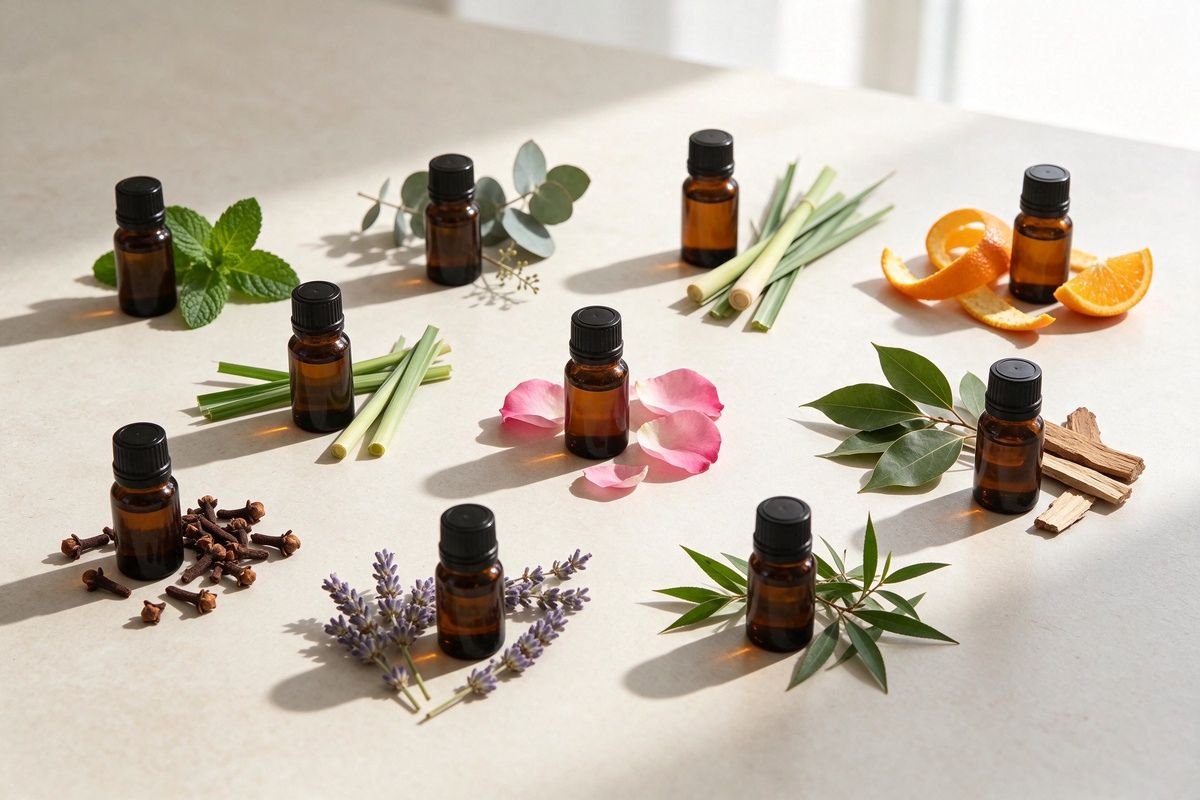
10 Essential Oils for Cosmetics & Personal Care
1. Peppermint Oil
| Botanical name | Mentha piperita |
| Plant part | Leaves |
| Extraction | Steam distillation |
| Key constituents | Menthol (30–50%), menthone (15–30%) |
| Aroma profile | Sharp, cool, minty with herbaceous undertones |
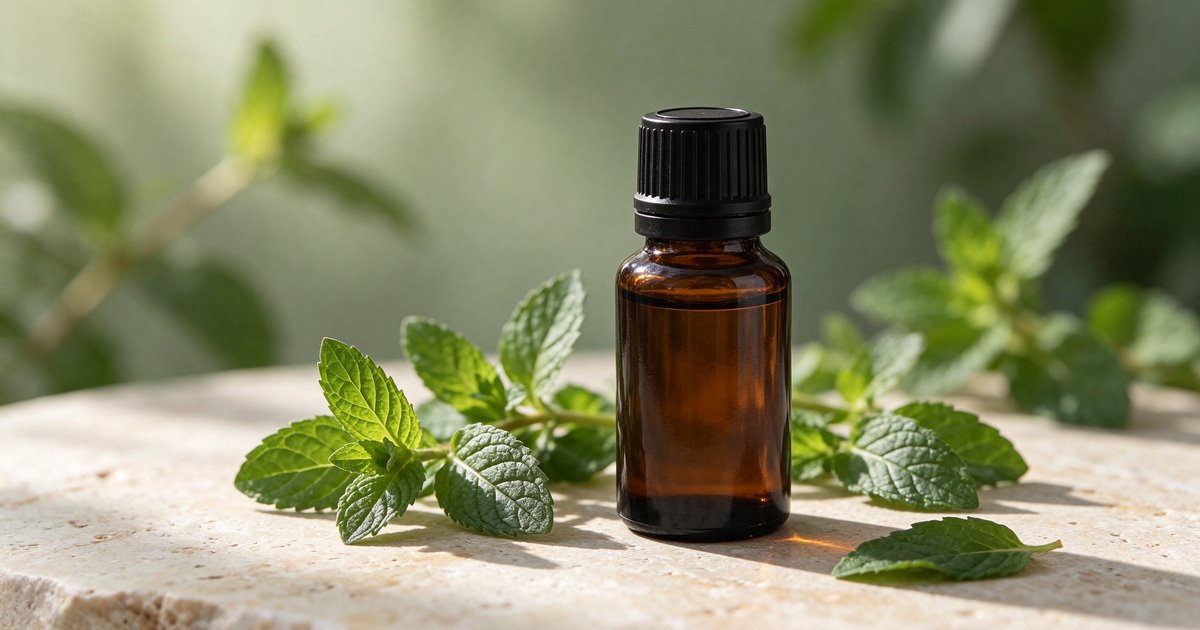
Cosmetic applications : Peppermint oil is widely used in lip balms, cooling body lotions, foot care products, shampoos (particularly for scalp-care formulations), toothpastes and mouthwashes. The menthol content provides a characteristic cooling sensation on skin.
Formulation considerations : Menthol concentration varies significantly between grades and origins. Indian Mentha arvensis (cornmint) oil is sometimes substituted and has a different menthol-to-menthone ratio than true M. piperita. Formulators should specify the species and confirm the GC-MS profile. Peppermint oil can destabilise emulsions at higher concentrations – start with 0.1–0.5% in leave-on products and test stability.
Safety considerations : Peppermint oil contains menthol, which is a known skin sensitiser at higher concentrations. IFRA standards set category-specific limits. Avoid use in products intended for children under three years. Not recommended for use around the eyes or mucous membranes at high concentrations.
Sakha International availability : Verified – available in Sakha International’s essential oil range.
2. Eucalyptus Oil
| Botanical name | Eucalyptus globulus |
| Plant part | Leaves and twigs |
| Extraction | Steam distillation |
| Key constituents | 1,8-Cineole / eucalyptol (60–85%) |
| Aroma profile | Fresh, camphoraceous, clean, slightly medicinal |
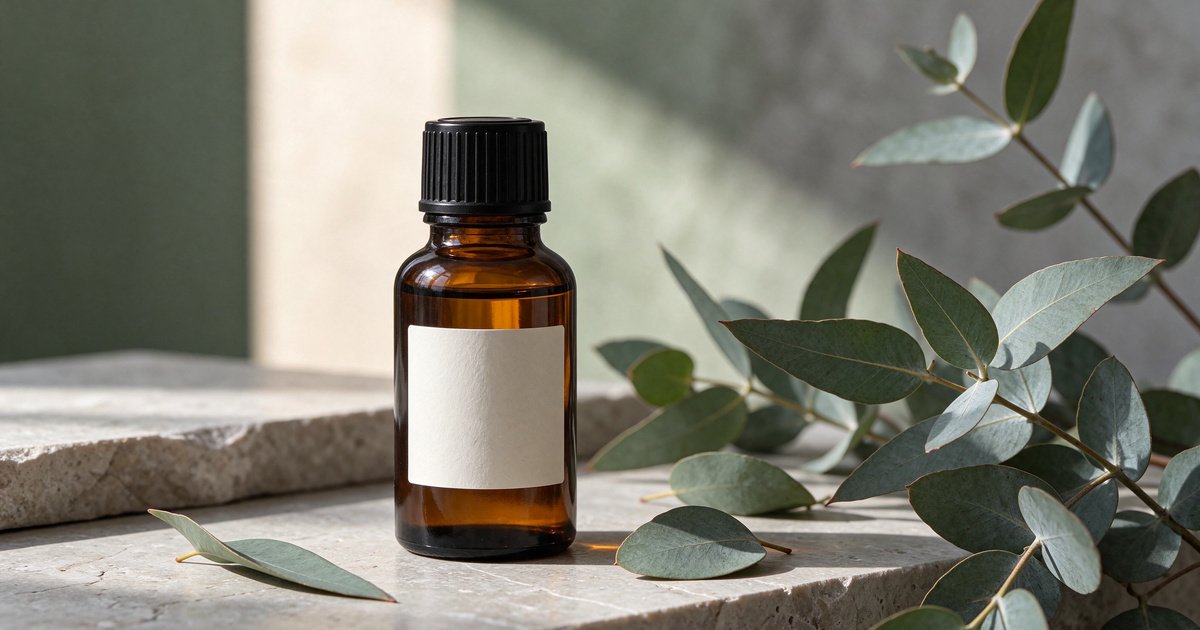
Cosmetic applications: Eucalyptus oil is commonly used in body washes, shower gels, bar soaps, muscle-relief balms, chest rubs, scalp treatments and air-care products. Its fresh scent also makes it a popular middle note in masculine and unisex fragrances.
Formulation considerations : Eucalyptus oil quality is primarily assessed by 1,8-cineole content, which should comply with the relevant ISO standard (ISO 770 for E. globulus). Higher cineole content generally indicates better quality for most cosmetic applications. The oil blends well with peppermint, lemongrass, lavender and cedarwood.
Safety considerations : Generally well tolerated at typical cosmetic use levels. However, undiluted eucalyptus oil should not be applied to skin. Products containing eucalyptus oil should not be applied near the face of infants and young children, as high cineole concentrations can cause respiratory distress. Check IFRA guidelines for category-specific limits.
Sakha International availability : Verified – available in Sakha International’s essential oil range.
3. Lemongrass Oil
| Botanical name | Cymbopogon flexuosus (East Indian) or C. citratus (West Indian) |
| Plant part | Leaves |
| Extraction | Steam distillation |
| Key constituents | Citral (geranial + neral, 65–85%) |
| Aroma profile | Fresh, strong lemon-like, slightly herbaceous and earthy |
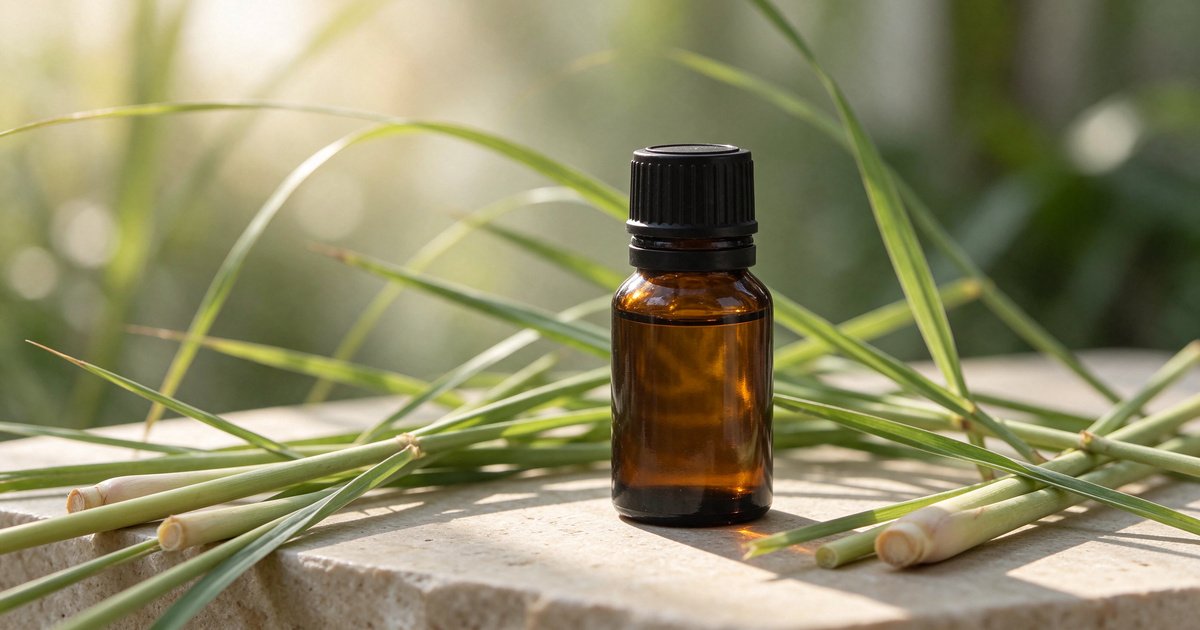
Cosmetic applications : Lemongrass oil is used in soaps, body washes, deodorants, room sprays, candles and insect-repellent personal care products. Its strong citrus character makes it a cost-effective top note in fragrance blends.
Formulation considerations : Citral is the dominant constituent and is a known skin sensitiser listed among the EU’s 26 declarable allergens. Formulators must declare citral on EU product labels when it exceeds 0.001% in leave-on products or 0.01% in rinse-off products. East Indian lemongrass (C. flexuosus) generally has higher citral content than the West Indian variety.
Safety considerations : IFRA restricts lemongrass oil use in certain leave-on product categories due to citral sensitisation risk. Use levels in leave-on products are typically low. Always conduct dermal safety testing on the finished formulation. Citral can also oxidise rapidly, forming sensitising hydroperoxides – use antioxidants and minimise air exposure.
Sakha International availability : Verified – available in Sakha International’s essential oil range.
4. Sweet Orange Oil
| Botanical name | Citrus sinensis |
| Plant part | Fruit peel |
| Extraction | Cold pressing (expression) |
| Key constituents | Limonene (90–97%) |
| Aroma profile | Sweet, fresh, bright citrus |
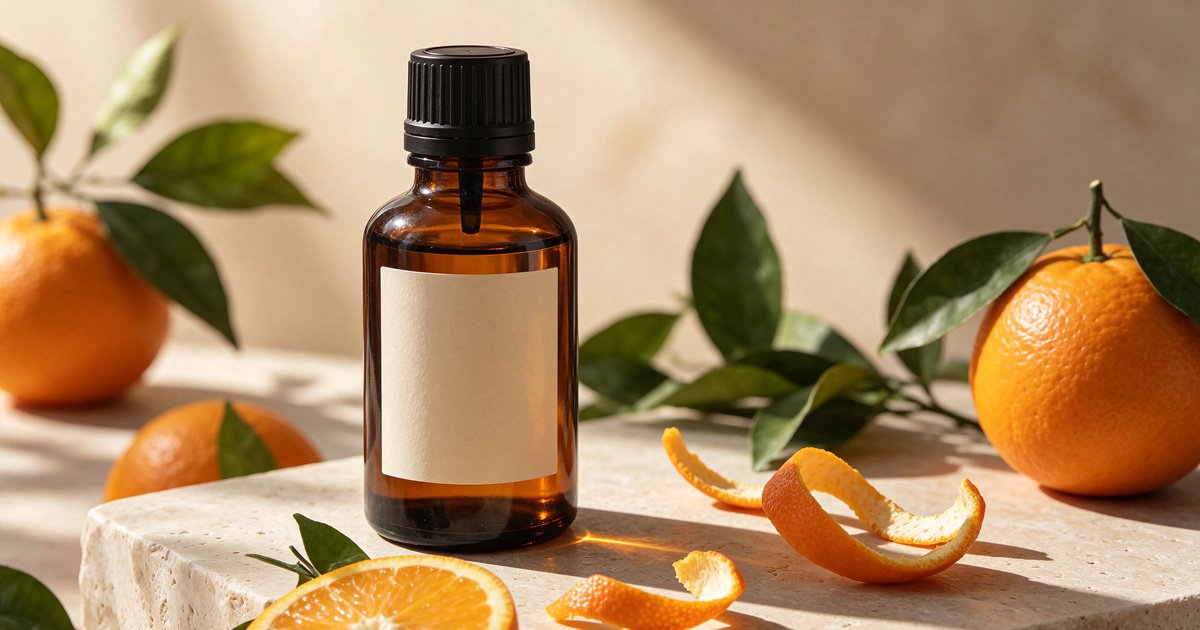
Cosmetic applications : One of the most widely used essential oils in personal care by volume. Sweet orange oil features in shower gels, hand soaps, shampoos, body lotions, lip balms and natural cleaning products. Its cheerful scent blends with almost any fragrance family.
Formulation considerations : Cold-pressed orange oil contains furanocoumarins that are potentially phototoxic, though sweet orange is generally considered non-phototoxic (unlike bitter orange or bergamot). Distilled or terpeneless grades eliminate this concern. Limonene oxidises readily – store under nitrogen, away from light and heat. Limonene must be declared on EU labels above allergen thresholds.
Safety considerations : Limonene is listed as a declarable allergen under EU cosmetics regulation. Fresh, properly stored orange oil is generally well tolerated, but oxidised oil carries a significantly higher sensitisation risk. Shelf life of cold-pressed orange oil is typically 6–12 months if stored correctly.
Sakha International availability : Verified – available in Sakha International’s essential oil range.
5. Citronella Oil
| Botanical name | Cymbopogon winterianus (Java) or C. nardus (Ceylon) |
| Plant part | Leaves |
| Extraction | Steam distillation |
| Key constituents | Citronellal (25–45%), geraniol (20–25%), citronellol (10–15%) |
| Aroma profile | Strong, fresh, citrus-like with slightly rosy and woody notes |
Cosmetic applications : Citronella oil is primarily known for insect-repellent applications, but it is also used in soaps, candles, deodorants, body sprays, room fresheners and outdoor personal care products. Citronellol and geraniol contribute to its rosy undertone.
Formulation considerations : Java citronella (C. winterianus) is preferred for most cosmetic applications because of its higher citronellal and geraniol content. Ceylon citronella (C. nardus) has lower active content. Geraniol and citronellol are both declarable EU allergens. Confirm the chemotype and species on the COA.
Safety considerations : Citronella oil contains multiple declarable allergens (geraniol, citronellol, limonene). IFRA standards set limits by product category. Patch testing is recommended when formulating leave-on products. Insect-repellent claims may bring the product under biocidal regulations in some jurisdictions.
Sakha International availability : Verified – available in Sakha International’s essential oil range.
6. Rose Oil
| Botanical name | Rosa damascena (Damask rose) |
| Plant part | Flowers |
| Extraction | Steam distillation (otto) or solvent extraction (absolute) |
| Key constituents | Citronellol (20–40%), geraniol (10–20%), nerol, linalool |
| Aroma profile | Rich, deep floral, sweet, warm, honeyed |
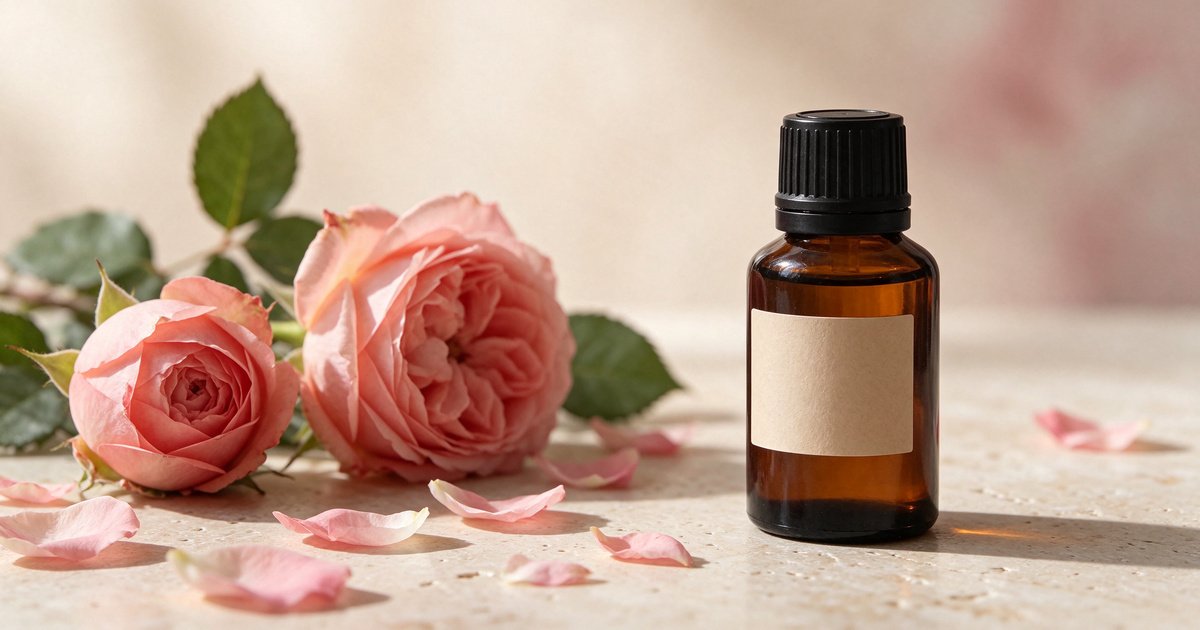
Cosmetic applications : Rose oil is one of the most valued ingredients in fine fragrance and premium skincare. It is used in perfumes, face creams, serums, toners, body oils, lip care and luxury soap. Rose absolute is preferred for perfumery; rose otto is preferred for skincare.
Formulation considerations : Genuine rose oil is extremely expensive – it takes roughly 3,000–5,000 kg of rose petals to produce 1 kg of rose otto. This makes adulteration a significant risk. Common adulterants include geranium oil, palmarosa oil and synthetic citronellol/geraniol. GC-MS testing and chiral analysis are essential for authentication.
Safety considerations : Rose oil is generally well tolerated in cosmetic use. Citronellol, geraniol and linalool are declarable EU allergens present in the oil. IFRA does not restrict rose oil itself, but individual constituents may have category-specific limits.
Sakha International availability : Verified – available in Sakha International’s essential oil range.
7. Camphor Oil
| Botanical name | Cinnamomum camphora |
| Plant part | Wood |
| Extraction | Steam distillation |
| Key constituents | Camphor (50–70% in white camphor fraction), 1,8-cineole |
| Aroma profile | Sharp, penetrating, medicinal, clean |
Cosmetic applications : Camphor oil (specifically the white camphor fraction) is used in muscle balms, cooling creams, chest rubs, medicated lip balms and certain anti-itch formulations. It provides a cooling-then-warming sensation similar to menthol.
Formulation considerations : Only white camphor oil (the lightest distillation fraction) is used in cosmetics. Brown and yellow camphor fractions contain safrole, which is toxic and restricted. Always specify “white camphor oil” on purchase orders and verify the safrole content is below regulatory limits.
Safety considerations : Camphor is a skin irritant at high concentrations and is toxic if ingested. The EU restricts camphor to a maximum of 11% in finished cosmetic products. Camphor should not be used in products for infants or young children. Always check the specific regulatory limits in your target market.
Sakha International availability : Verified via IndiaMART listing – Sakha’s team should confirm current availability and consider adding a dedicated product page.
8. Clove Oil
| Botanical name | Syzygium aromaticum (syn. Eugenia caryophyllata) |
| Plant part | Flower buds (clove bud oil), stems, or leaves |
| Extraction | Steam distillation |
| Key constituents | Eugenol (70–90% in bud oil), eugenyl acetate, beta-caryophyllene |
| Aroma profile | Warm, spicy, rich, slightly sweet and woody |
Cosmetic applications : Clove bud oil is used in oral care products (toothpastes, mouthwashes), warming massage oils, certain anti-ageing formulations and spice-note fragrances. Eugenol provides a distinctive warm-spicy character valued in oriental and gourmand perfumery.
Formulation considerations : Clove bud oil is the preferred grade for cosmetics – clove leaf and stem oils have higher eugenol but harsher profiles and more impurities. Eugenol is a known sensitiser listed among the EU’s declarable allergens. It can also discolour formulations over time. Use at low concentrations in leave-on products.
Safety considerations : Eugenol is a significant sensitiser at higher concentrations. IFRA restricts eugenol-containing materials by product category. Clove oil is a potent mucous membrane irritant when undiluted – handle with care during manufacturing. Not recommended for sensitive or damaged skin without risk assessment.
Sakha International availability : Verified via IndiaMART listing – Sakha’s team should confirm current availability and consider adding a dedicated product page.
9. Lavender Oil
| Botanical name | Lavandula angustifolia (true lavender) |
| Plant part | Flowering tops |
| Extraction | Steam distillation |
| Key constituents | Linalool (25–45%), linalyl acetate (25–45%) |
| Aroma profile | Floral, herbaceous, clean, calming, slightly woody |
Cosmetic applications : Lavender is arguably the most versatile essential oil in cosmetics and personal care. It is used in virtually every product category – face creams, body lotions, shampoos, conditioners, bath oils, soaps, deodorants, baby care, lip balms, perfumes and aromatherapy products.
Formulation considerations : True lavender (L. angustifolia) should not be confused with lavandin (Lavandula × intermedia), which has a sharper, more camphoraceous profile. Linalool and linalyl acetate ratios vary by origin (French, Bulgarian, Kashmiri). High-altitude lavender is generally considered superior for cosmetic use.
Safety considerations : Lavender oil is generally considered one of the safest essential oils for topical use. However, linalool and linalyl acetate are both declarable allergens under EU regulation. Oxidised linalool is a stronger sensitiser than fresh linalool – store properly and monitor shelf life.
Sakha International availability : For bulk availability, pricing and product specifications, contact the Sakha International team.
10. Tea Tree Oil
| Botanical name | Melaleuca alternifolia |
| Plant part | Leaves and terminal branchlets |
| Extraction | Steam distillation |
| Key constituents | Terpinen-4-ol (≥30%, per ISO 4730), γ-terpinene, α-terpinene |
| Aroma profile | Fresh, medicinal, camphoraceous, slightly spicy |
Cosmetic applications : Tea tree oil is a mainstay in blemish-care products, facial cleansers, spot treatments, anti-dandruff shampoos, deodorants and foot care products. Its antimicrobial properties are among the most studied of any essential oil.
Formulation considerations : Quality tea tree oil must comply with ISO 4730, which specifies minimum terpinen-4-ol content (≥30%) and maximum 1,8-cineole content (≤15%). A revised version (ISO 4730:2025) addresses enantiomeric parameters. Tea tree oil oxidises readily – use within 6–12 months of opening and store under nitrogen where possible.
Safety considerations : EU regulatory authorities have recently reviewed the safety classification of tea tree oil. In 2025, the UK HSE published its final opinion removing certain proposed restrictions. Formulators should stay current with both EU SCCS and local regulatory developments. Sensitisation risk increases with oxidised or aged oil.
Sakha International availability : For bulk availability, pricing and product specifications, contact the Sakha International team.
Comparison Table : 10 Essential Oils for Cosmetics Manufacturing
| Essential Oil | Botanical Name | Key Constituents | Primary Cosmetic Uses | Sensitisation Risk | Sakha Avail. |
|---|---|---|---|---|---|
| Peppermint Oil | Mentha piperita | Menthol, menthone | Lip care, cooling lotions, scalp care, oral care | Moderate (menthol) | – Verified |
| Eucalyptus Oil | Eucalyptus globulus | 1,8-Cineole | Body wash, soaps, muscle balms, scalp care | Low–moderate | – Verified |
| Lemongrass Oil | Cymbopogon flexuosus | Citral | Soaps, deodorants, candles, body wash | Moderate–high (citral) | – Verified |
| Sweet Orange Oil | Citrus sinensis | Limonene | Shower gels, hand soaps, shampoos, lip balms | Low (fresh); moderate if oxidised | – Verified |
| Citronella Oil | Cymbopogon winterianus | Citronellal, geraniol | Soaps, deodorants, repellent products, candles | Moderate (geraniol) | – Verified |
| Rose Oil | Rosa damascena | Citronellol, geraniol | Perfumes, face creams, serums, luxury soap | Low | – Verified |
| Camphor Oil | Cinnamomum camphora | Camphor, 1,8-cineole | Muscle balms, cooling creams, medicated lip balms | Moderate–high (irritant) | ⚠ Verify |
| Clove Oil | Syzygium aromaticum | Eugenol | Oral care, warming massage oils, fragrances | Moderate–high (eugenol) | ⚠ Verify |
| Lavender Oil | Lavandula angustifolia | Linalool, linalyl acetate | Face creams, body lotions, shampoos, perfumes | Low | Contact for Availability |
| Tea Tree Oil | Melaleuca alternifolia | Terpinen-4-ol | Blemish care, cleansers, anti-dandruff, foot care | Low–moderate (oxidised = higher) | Contact for Availability |
Essential Oils vs. Carrier Oils : What Formulators Need to Know
The distinction matters for formulation, labelling and safety :
| Property | Essential Oils | Carrier Oils |
|---|---|---|
| Nature | Concentrated volatile aromatic compounds | Fixed (non-volatile) vegetable or seed oils |
| Extraction | Steam distillation, cold pressing, solvent extraction | Cold pressing, expeller pressing, solvent extraction |
| Typical concentration | 0.1–3% in formulations | Can form the base (up to 100%) |
| Volatility | Highly volatile | Non-volatile |
| Skin application | Must be diluted | Can be applied directly |
| Function | Fragrance, functional actives, sensory effects | Emollients, moisturisers, delivery vehicles |
| Shelf life | 6 months–3 years | 6 months–2 years |
Sakha International supplies both essential oils and carrier oils – an important consideration for formulators who prefer to streamline their supply chain with a single vendor.
Cosmetic-Grade Sourcing and Quality Documentation

Why Quality Documentation Matters
Cosmetic-grade essential oils are not the same as aromatherapy-grade or food-grade oils. Cosmetic manufacturers need documentation that supports regulatory compliance, batch traceability and consumer safety.
Key Documentation Checklist
Certificate of Analysis (COA) : Should include botanical name, plant part, country of origin, extraction method, lot/batch number, physical characteristics (specific gravity, refractive index, optical rotation), GC-MS composition profile, and compliance statement.
Safety Data Sheet (SDS) : Required under GHS (Globally Harmonized System) for handling, storage and transport. Essential for manufacturing site compliance.
GC-MS Report : Gas chromatography–mass spectrometry analysis provides the chemical fingerprint of the oil. This is the primary tool for detecting adulteration and confirming identity. Request lot-specific reports, not generic profiles.
IFRA Certificate : Confirms maximum safe use levels by product category. Essential for fragrance compliance in export markets.
Allergen Declaration : Lists EU-declarable allergens present above threshold concentrations. Required for products sold in the EU and many other markets.
Botanical Identity and Adulteration Risks
Adulteration is one of the biggest risks in essential oil procurement. Common issues include :
Species substitution : Cornmint (Mentha arvensis) sold as peppermint (M. piperita). Lavandin sold as true lavender.
Dilution with carrier oils or solvents : Increases volume, reduces potency. Detectable via specific gravity and refractive index testing.
Addition of synthetic isolates : Adding synthetic linalool to lavender oil, or synthetic citral to lemongrass. Detectable via chiral GC analysis and isotope ratio mass spectrometry.
Blending with cheaper oils : Rose oil adulterated with palmarosa or geranium. Detectable via detailed GC-MS profiling.
Always request lot-specific GC-MS analysis and compare against pharmacopoeia or ISO standards for the relevant oil.
Selecting a Bulk Essential Oil Supplier
When evaluating suppliers for cosmetic-grade essential oils, consider :
- Product range and consistency. Does the supplier stock the oils you need across seasons? Can they maintain batch-to-batch consistency in composition and aroma?
- Quality documentation. Does the supplier provide COA, SDS, GC-MS, IFRA certificates and allergen declarations as standard – without having to be asked?
- Regulatory awareness. Does the supplier understand the difference between aromatherapy, food-grade and cosmetic-grade requirements? Are they aware of IFRA, EU Cosmetics Regulation and relevant ISO standards?
- Traceability. Can the supplier trace each batch back to the geographical origin, harvest season and distillation facility?
- Minimum order quantities and packaging. Are MOQs workable for your production volumes? Is packaging suitable for essential oils (amber glass, aluminium, or lined steel)?
- Technical support. Can the supplier provide formulation guidance, answer technical queries about specific oils, or supply samples for stability testing?
- Export capability. For international buyers: does the supplier have experience with export documentation, customs procedures and international shipping of hazardous goods?
Sakha International, established in 2011 and based in New Delhi, India, operates as a manufacturer, wholesaler and exporter of essential oils and related perfumery ingredients. For specific product enquiries, contact the Sakha team directly.
Storage, Packaging and Stability
Essential oils degrade when exposed to oxygen, light, heat and moisture. Proper storage extends shelf life and maintains both safety and performance :
Temperature : Store between 15–25°C. Refrigeration (4–8°C) extends shelf life for citrus and other oxidation-prone oils. Note that rose oil and some others may solidify at lower temperatures – this is reversible.
Light : Store in amber glass, aluminium or opaque containers. UV light accelerates oxidation and chemical degradation.
Oxygen : Minimise headspace in containers. For high-value oils or large bulk containers, consider nitrogen blanketing.
Containers : Amber glass bottles for small volumes. Aluminium or epoxy-lined steel drums for bulk. Never store essential oils in plain plastic.
Shelf Life Guidelines (Typical, Properly Stored)
Citrus oils (orange, lemon) : 6–12 months
Herbaceous oils (peppermint, eucalyptus, lemongrass) : 1–2 years
Floral oils (rose, lavender) : 2–3 years
Spice and wood oils (clove, camphor) : 2–4 years
These are general guidelines. Always test incoming batches and monitor stored stock. Oxidised oils should not be used in cosmetic formulations – they carry a higher sensitisation risk and may fail regulatory compliance.
Buyer Checklist : Before You Place a Bulk Order
Use this checklist before placing a bulk essential oil order for cosmetic manufacturing :
☐ Confirm the exact botanical name and plant part (not just the common name)
☐ Specify the chemotype or variety if relevant (e.g., East Indian lemongrass, Java citronella)
☐ Request a lot-specific COA with GC-MS profile
☐ Request an SDS compliant with GHS standards
☐ Request an IFRA certificate for the specific lot
☐ Request an allergen declaration listing EU-declarable allergens and concentrations
☐ Verify the extraction method (steam-distilled vs. cold-pressed vs. solvent-extracted)
☐ Ask about the country of origin and distillation date
☐ Confirm shelf life and recommended storage conditions
☐ Ask about MOQs, lead times and sample availability
☐ Confirm packaging suitability (amber glass, aluminium, or lined drums)
☐ Verify the supplier’s export documentation capability if ordering internationally
☐ Ask whether the supplier can provide a retained sample for each batch
FAQs :
Q1 : What is the difference between an essential oil and a fragrance oil?
A : An essential oil is a natural product obtained from a defined botanical source by distillation, expression or other physical means. A fragrance oil is a manufactured blend that may contain synthetic aroma chemicals, natural isolates and/or essential oils. For products marketed as “natural,” essential oils are typically preferred, but regulatory definitions of “natural” vary by jurisdiction.
Q2 : Can I use essential oils directly on skin in a cosmetic product?
A : Essential oils should always be diluted in a carrier oil, emulsion or other suitable base before skin application. Typical use levels in leave-on cosmetic products range from 0.1% to 2%, depending on the specific oil, the product type and the target market’s regulatory limits. Always follow IFRA guidelines and conduct a safety assessment for the finished product.
Q3 : What is a COA and why does it matter?
A : A Certificate of Analysis (COA) documents the chemical composition, physical properties and quality parameters of a specific batch of essential oil. It allows formulators to verify identity, purity and consistency. A COA should be lot-specific, not a generic document that applies to all batches.
Q4 : What does IFRA compliance mean?
A : IFRA (International Fragrance Association) publishes standards that set maximum safe use levels for fragrance materials – including essential oils – in different product categories (lip products, deodorants, body lotions, etc.). IFRA compliance means the essential oil has been assessed against these standards and comes with a certificate stating the maximum allowable concentration by category. IFRA compliance is a voluntary industry standard, but adherence is widely expected by cosmetic manufacturers and retailers.
Q5 : How do I verify that an essential oil is not adulterated?
A : Request a lot-specific GC-MS analysis and compare the results against published standards (ISO, pharmacopoeia). Key indicators of adulteration include unexpected peaks in the chromatogram, unusual ratios of key constituents, abnormal optical rotation or refractive index, and pricing that is significantly below market rates.
Q6 : Does Sakha International supply samples for testing?
A : Contact Sakha International directly for sample availability, pricing and lead times: sakhainternational.com/contact or email sakha.international@yahoo.com.
Q7 : What industries does Sakha International serve?
A : Sakha International supplies essential oils to manufacturers across personal care, skin care, fine fragrance, home care and air care sectors, among others.
Source Your Essential Oils from India
India is one of the world’s largest producers of essential oils – particularly peppermint/mentha, lemongrass, eucalyptus and citronella. Sourcing from an Indian supplier offers access to competitive pricing, established distillation infrastructure and large-volume availability.
Sakha International has been supplying essential oils, aroma chemicals and perfumery compounds since 2011 from New Delhi, India, serving cosmetic manufacturers, fragrance houses and personal care brands worldwide.
→ Request a Bulk Essential Oil Quote


Leave A Comment