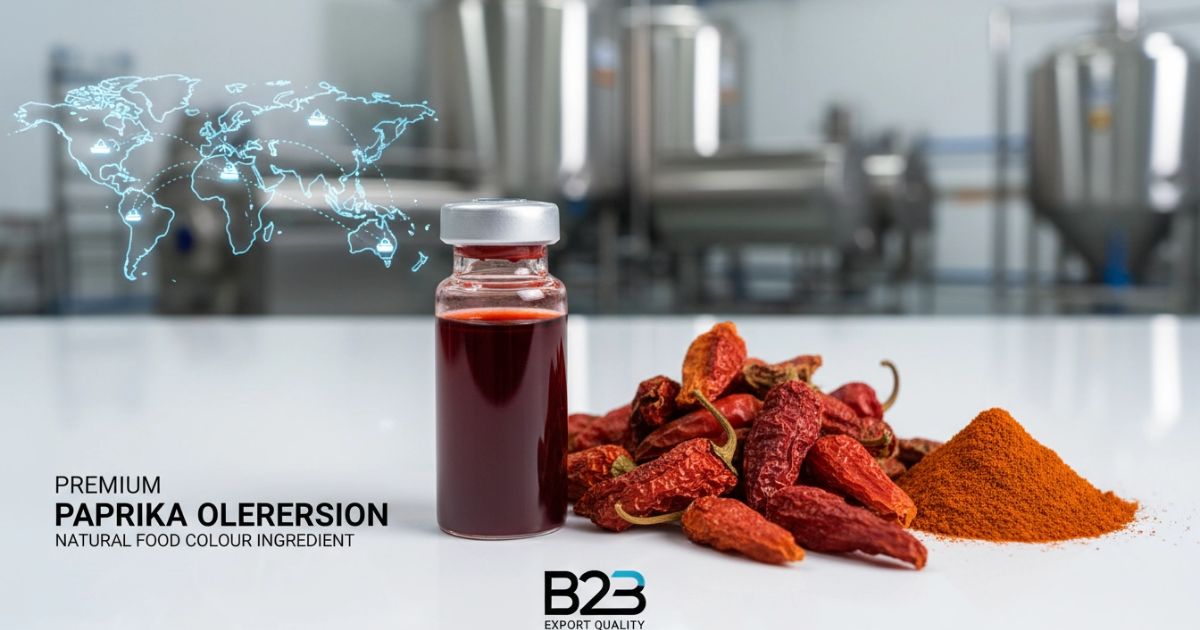
Behind almost every packet of coloured snack seasoning, sausage casing, or ready meal with a warm red-orange hue, there is a good chance paprika oleoresin was used to get that colour right.
As global food, feed, and cosmetic manufacturers move away from synthetic dyes, this natural paprika extract has quietly become one of the most sought-after ingredients in the plant-based colourant category.For a paprika oleoresin exporter working with buyers across the USA, Europe, and the Middle East, understanding the chemistry, grading, and compliance behind this product is what separates a reliable supplier from the rest.
What Is Paprika Oleoresin
Paprika oleoresin is a concentrated, oil-soluble extract derived from Capsicum annuum, the same plant family used to produce sweet paprika.
The extract carries two primary carotenoid pigments, capsanthin and capsorubin, which together give it that signature deep red colour. Unlike ground paprika, which loses potency quickly and varies from batch to batch, the oleoresin form isolates these pigments into a stable, concentrated liquid or paste.
A small quantity delivers colour strength that would otherwise require several times the amount of dried spice, which is why food technologists rely on it for consistency across large production runs.
The Chemistry Behind the Colour
What makes paprika oleoresin unique among natural colourants is its carotenoid profile. Capsanthin alone can account for a significant share of the total pigment content, and it is this compound that gives the extract its resistance to fading under normal storage and light conditions compared to some other natural pigments.
The extract also contains trace amounts of capsaicinoids, though sweet paprika varieties are selected specifically to keep pungency low, since colour rather than heat is the primary requirement for most food applications.
This distinguishes paprika oleoresin from capsicum oleoresin, which is extracted from hotter pepper varieties and used mainly for pungency in sauces and seasonings rather than colour.
How Paprika Oleoresin Is Extracted
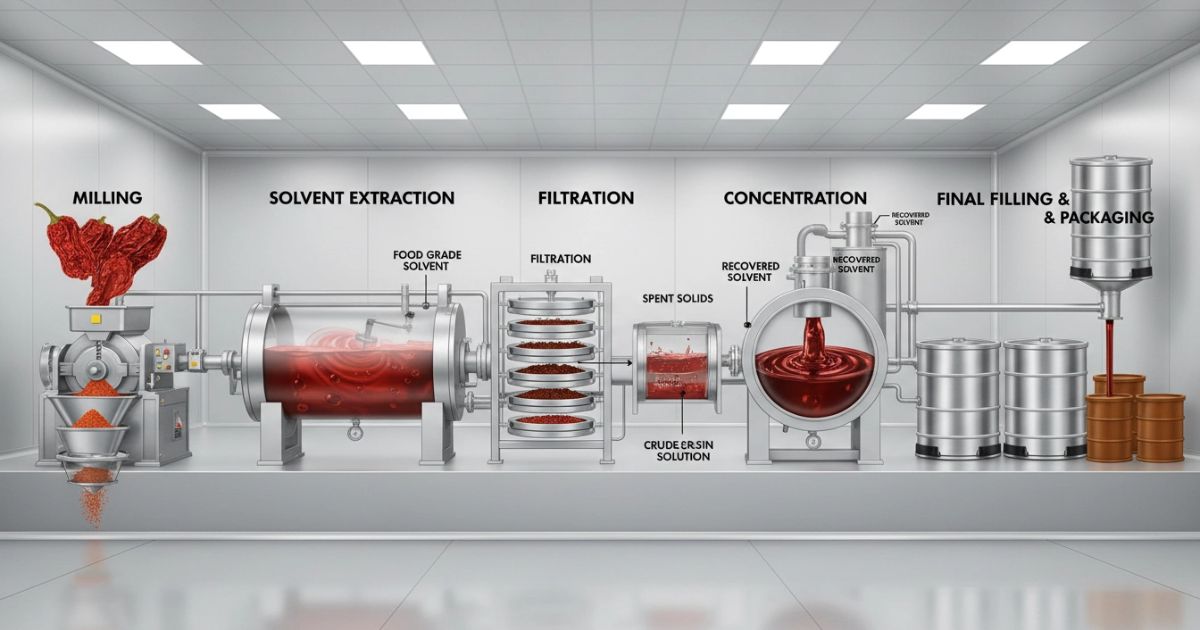
Two extraction methods dominate commercial production. The first, solvent extraction, uses food-grade hexane or ethyl acetate to draw pigments and aromatic compounds out of dried, milled paprika pods. The solvent is then evaporated under vacuum and recovered for reuse, leaving a concentrated oleoresin behind. This method is widely used because it is cost-effective at scale and produces consistent colour values.
The second method, supercritical CO2 extraction, uses pressurised carbon dioxide instead of chemical solvents. It is a cleaner process that leaves no solvent residue and is often preferred by buyers targeting premium, clean-label, or organic-certified product lines, though it typically comes at a higher production cost. A responsible paprika oleoresin manufacturer will disclose which method was used and provide residue testing data regardless of the process chosen.
Understanding Colour Grading and Quality Parameters
Paprika oleoresin is graded primarily by its ASTA colour value, a standard set by the American Spice Trade Association that measures colour intensity through spectrophotometric analysis.
Lower ASTA values are suited to applications needing a subtle tint, while higher values are used where an intense, saturated red is required, such as in processed meats or spice blends.
Beyond colour, buyers should evaluate solvent residue levels, moisture content, microbial load, and heavy metal testing results before finalising an order. Reputable suppliers issue a certificate of analysis with every shipment covering each of these parameters, which protects the buyer’s own regulatory standing when the product is used downstream.
Where Paprika Oleoresin Is Used
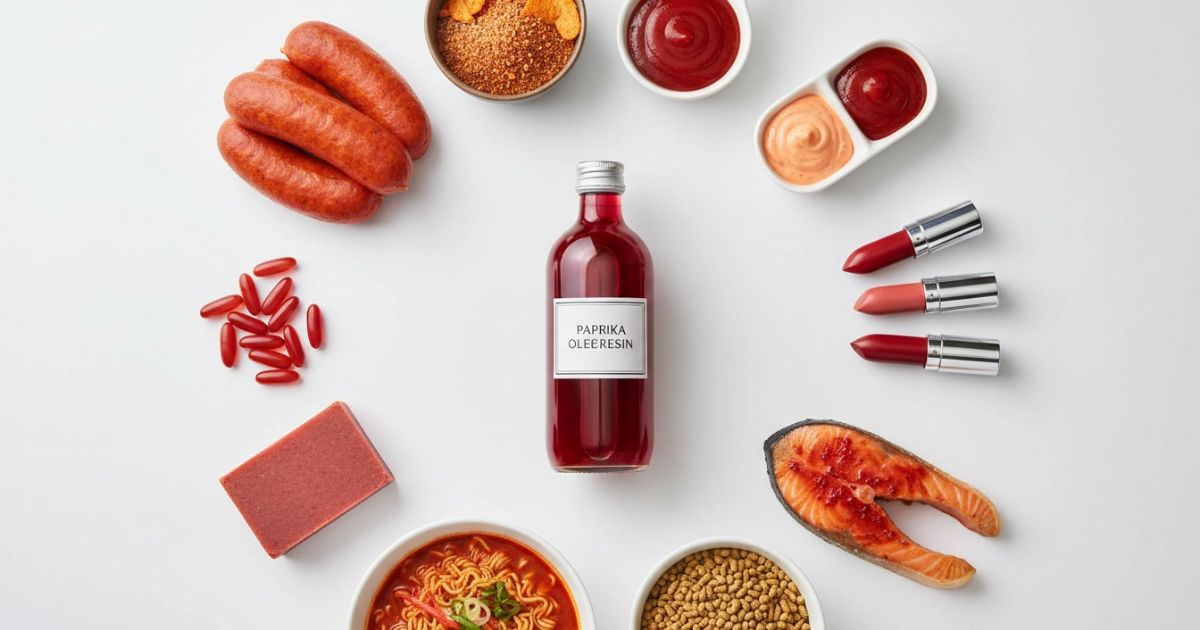
The largest consumer of paprika oleoresin remains the processed food sector, where it colours sausages, cured meats, snack seasonings, instant noodles, sauces, soups, and ready-to-eat meals. The poultry and aquaculture industry is another major buyer, using paprika oleoresin as a feed additive to naturally deepen the colour of egg yolks, broiler skin, and farmed fish such as salmon and trout, an application where consumer expectations around colour directly influence purchasing decisions at retail.
Outside the food chain, paprika oleoresin appears in cosmetic formulations such as lipsticks, blushes, and soaps as a natural colourant alternative to synthetic dyes, and in some nutraceutical and pharmaceutical preparations that use plant-based pigments over lab-synthesised alternatives.
Regulatory Compliance and Safety Standards
Due to the fact that paprika oleoresin is introduced into the food chain in different countries, it is important to be compliant. Paprika oleoresin is known to be an exempt color additive without requiring a certification according to FDA in the United States.
As per the European Union, paprika oleoresin is classified as food color under the name E160c. Additionally, the buyer should make sure that the FSSAI requirements are met for any Indian origin exports, along with ISO and HACCP certificates for the manufacturing company.
It is common for most international buyers to ask for Kosher, Halal, and non-GMO certificates as well, especially in case of exports for the USA and EU markets.
Why India Remains a Preferred Sourcing Hub
Paprika is one of the spices that India grows in abundance in its spice belt. With decades of experience in processing, India has been a reliable source for buyers in search of value and quality. Indian manufacturers are well-versed in creating customised ASTA values and formats – whether that be oil-soluble for food processing or water-dispersible for beverage and cosmetic applications.
Indian paprika oleoresin suppliers are a practical option for larger manufacturers and smaller speciality brands that are entering the natural colourant space for the first time, thanks to competitive processing costs, established export infrastructure and flexibility on order volumes.
What Sakha International Offers
Sakha International supplies paprika oleoresin to B2B buyers across food, feed, and cosmetic industries, with every batch tested for colour value, solvent residue, and microbial safety before it leaves the facility.
Buyers can request customised ASTA grading, oil-soluble or water-dispersible formats, and full export documentation including certificates of analysis, ensuring the product integrates smoothly into your existing compliance processes.
Our experience working with international buyers means shipments are handled with the paperwork and lead times that export-focused businesses depend on.
FAQs :
Q1. Are paprika oleoresin and paprika extract the same?
Yes, they are considered the same thing, but oleoresin is specifically the oil extract type used in industry coloring and flavoring applications.
Q2. Which ASTA color level should I select?
This will depend on your application needs, as food processors usually require a high ASTA color value for strong coloring, whereas beverages or cosmetics might need a softer color.
Q3. Will paprika oleoresin change the taste of my food products?
While it adds a slight warmth of flavor, it is mainly used for coloring purposes and will not have much effect on the taste of the product.
Q4. Will paprika oleoresin be appropriate for organic products?
Yes, provided that it is either extracted by CO2 method or comes from organic paprika.
Partner with a Reliable Exporter
If you’re looking for a dependable supplier of paprika oleoresin, Sakha International can help. We supply quality-tested, export-ready batches backed by complete documentation and consistent ASTA colour values. Contact our team to discuss your application, volume requirements, and delivery schedule.


Leave A Comment