

Citronella Oil
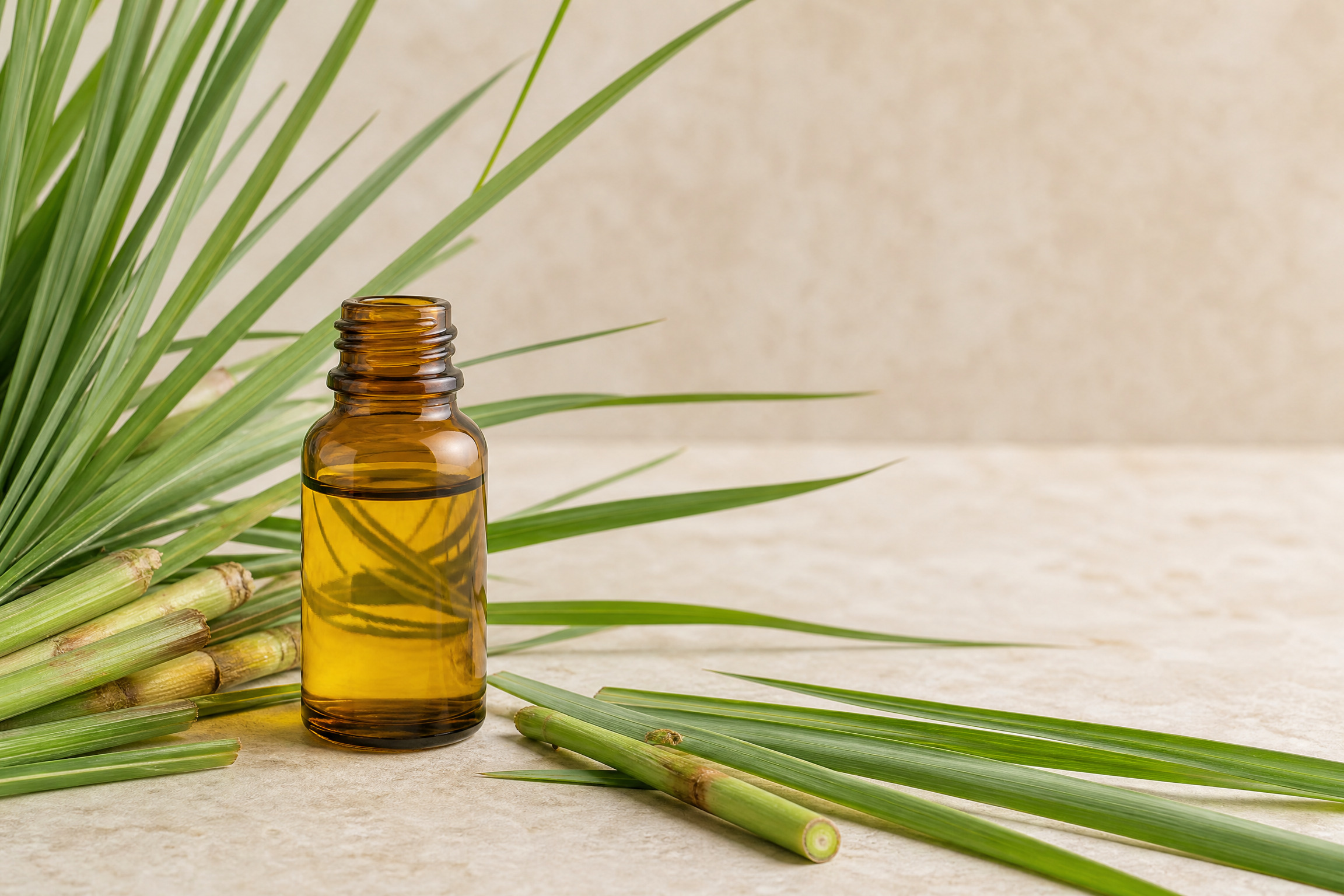
Citronella oil is one of the most widely used natural aromatic raw materials in the fragrance and consumer-goods supply chain. Sakha International offers citronella oil for industrial and commercial buyers who need consistent quality, clear documentation and dependable bulk supply. This page sets out the material’s botanical identity, composition, grades and applications so that formulators and procurement teams can specify and source it with confidence.
| Product Name | Citronella Oil |
| Botanical Name | Cymbopogon winterianus Jowitt (Java) / Cymbopogon nardus (L.) Rendle (Ceylon) |
| Type | Java type / Ceylon type [CONFIRM which Sakha supplies] |
| Plant Family | Poaceae (Gramineae) |
| Plant Part | Leaves / aerial grass |
| Extraction Method | Steam distillation |
| Appearance | Clear, mobile liquid; pale yellow to pale brownish-yellow |
| Aroma | Fresh, lemony and rosy with woody nuances (Java); warmer, woody-camphoraceous (Ceylon) |
| Key Constituents | Citronellal, citronellol, geraniol (plus geranyl acetate, limonene, others) |
| CAS Number | 8000-29-1 |
| EC / EINECS | 232-395-3 |
| Origin | [CONFIRM] |
The oil’s commercial value rests on three naturally occurring compounds: the aldehyde citronellal and the terpene alcohols citronellol and geraniol. These deliver the characteristic fresh-lemony, rosy odour and also make citronella oil an important feedstock for isolating and synthesising downstream aroma chemicals used across fine fragrance and functional perfumery.
The two types are genuinely different products. Buyers should specify the type explicitly rather than ordering “citronella oil” alone.
| Attribute | Java type | Ceylon type |
|---|---|---|
| Botanical source | Cymbopogon winterianus Jowitt | Cymbopogon nardus (L.) Rendle |
| Composition | Higher citronellal; citronellal + geraniol + citronellol dominant | Higher geraniol, lower citronellal; contains methyl isoeugenol |
| Aroma | Fresher, sweeter, lemony-rosy, cleaner | Warmer, woody, camphoraceous, less bright |
| Standard | ISO 3848; FEMA 2308 | FEMA 2309 |
| Positioning | Majority of world supply; preferred for perfumery and aroma-chemical isolation | Smaller, Sri Lanka-centred; specific woody profiles |
| Common use | Soaps, detergents, household & air care, cosmetics, isolates | Traditional/aromatherapy, niche woody fragrance work |
Because Ceylon oil can contain methyl isoeugenol, which is restricted in some regulated markets, formulators targeting the EU and similar jurisdictions should confirm type and composition against their compliance requirements.
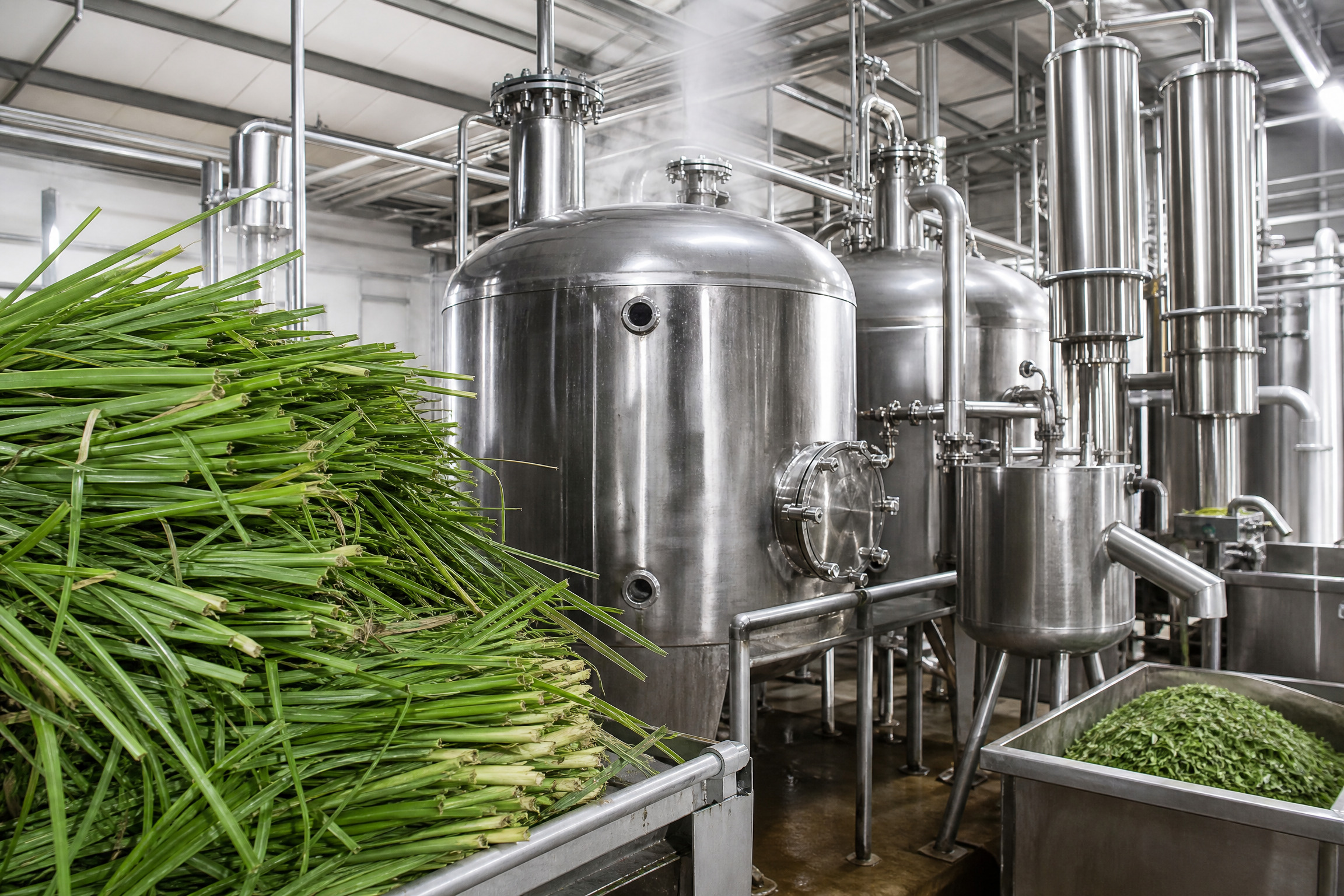
Citronella oil is obtained by steam distillation of the freshly cut or partially dried grass. Steam passes through the plant material, volatilising the aromatic compounds, which are then condensed and separated from the water phase. Yield and profile vary with species, leaf age, agronomy and distillation conditions. Steam distillation is the standard industry method; the specific process, equipment and parameters used for any given lot should be verified with the supplier rather than assumed.
Java citronella oil presents as a clear, mobile liquid, pale yellow to pale brownish-yellow, with a fresh, sweet, lemony top note over a rosy body and a mild woody dry-down. Ceylon oil is typically warmer, woodier and more camphoraceous. The odour is driven by citronellal together with citronellol and geraniol; supporting constituents such as geranyl acetate, limonene and elemol round out the profile. Organoleptic assessment (colour, clarity, odour) is a routine first-line quality check and is used alongside instrumental analysis.
1. Fragrance & Perfumery
A workhorse of functional perfumery. Java citronella oil is used directly in fragrance compounds and as an economical natural note, and indirectly as a raw material for aroma chemicals. It blends readily with geranium, citrus, cedarwood and pine facets.
2. Soap, Home Care & Household Products
Widely used to perfume soaps, detergents, surface and household cleaners and other technical products where a fresh, lemony-green character and good performance-to-cost are required.
3. Cosmetics & Personal Care
Used as a fragrance component in personal-care formulations, subject to IFRA use limits and applicable cosmetic-fragrance-allergen labelling. Formulators should observe restriction levels for citronella oil and its constituent allergens.
4. Air Care & Aromatic Applications
Employed in air-care and ambience products, candles and diffuser bases where a bright, natural citrus-grassy signature is desired.
5. Aroma-Chemical Feedstock
Citronella oil is an established source of citronellal, citronellol and geraniol, which are further processed into higher-value aroma and specialty chemicals used across the fragrance industry.
For B2B buyers, quality is defined by documentation and reproducibility. A robust evaluation covers:
- Identity: correct species/type (Java, Ceylon or Jammu) and botanical name.
- Organoleptic checks: appearance, colour, clarity and odour against a reference.
- Physical properties: relative density, refractive index, optical rotation and solubility, evaluated against the relevant standard (e.g. ISO 3848 for Java type).
- GC-MS: constituent profile confirming citronellal, citronellol and geraniol levels and screening for adulteration.
- COA: a batch Certificate of Analysis stating tested parameters.
- SDS: Safety Data Sheet for safe handling, transport and regulatory compliance.
Sakha International can align supply to these documentation expectations [CONFIRM available documentation and any guaranteed specification ranges]. No numerical specification values are stated here to avoid misrepresenting a specific lot.
Store in tightly closed, appropriate (typically HDPE, aluminium or lined-steel) containers, away from heat, direct sunlight and ignition sources, in a cool, well-ventilated area. Keep containers full and sealed to limit oxidation; headspace and moisture can degrade odour quality over time. Handle with suitable skin and eye protection, as citronella oil is a recognised sensitiser. Always follow the product SDS for storage temperature, shelf life, personal protective equipment and spill response.
Before placing a bulk order, procurement teams should confirm the following with the supplier:
- Type and botanical name (Java / Ceylon / Jammu) and target odour profile.
- Available grade(s) and any guaranteed constituent ranges, supported by GC-MS and COA.
- Origin, crop/lot traceability and batch consistency.
- Packaging options, net weights and export-compliant labelling.
- Minimum order quantity, lead time and supply continuity.
- Documentation: COA, SDS, IFRA/allergen statements and any certifications required for your market.
Specifics such as MOQ, packaging, certifications and export coverage for Sakha International are [CONFIRM] and should be inserted once verified.
Founded in 2011 and based in Delhi, India, Sakha International is a manufacturer, wholesaler, distributor, trader and exporter of essential oils, aroma oils, aromatic chemicals, perfumery compounds, oleoresins, specialty chemicals and related raw materials. The company supplies fragrance, personal-care, home-care and industrial customers, and works with a portfolio of established fragrance-industry partners. For citronella oil enquiries, Sakha International offers B2B quotation and technical support.
| Request a Citronella Oil Quotation
Tell us your required type (Java / Ceylon), volume and target specification, and our team will respond with pricing, documentation and lead time. Email: sakha.international@yahoo.com | Phone: +91 98100 55405, +91 93124 55405 |
1. What is citronella oil used for?
It is used mainly as a fragrance raw material in soaps, detergents, household and air-care products, cosmetics and personal care, and as a feedstock for aroma chemicals such as citronellal, citronellol and geraniol.
2. What is the difference between Java and Ceylon citronella oil?
Java oil (Cymbopogon winterianus) is higher in citronellal with a fresher, lemony-rosy odour and covers most world supply. Ceylon oil (Cymbopogon nardus) is higher in geraniol, warmer and woodier, and contains methyl isoeugenol. They are different products and should be specified by type.
3. What is the botanical source of citronella oil?
Grasses of the genus Cymbopogon (family Poaceae): mainly Cymbopogon winterianus (Java) and Cymbopogon nardus (Ceylon); Cymbopogon pendulus (Jammu) is grown in India.
4. How is citronella oil extracted?
By steam distillation of the fresh or partially dried leaves and aerial grass.
5. What is the CAS number of citronella oil?
CAS 8000-29-1 (EC/EINECS 232-395-3), applicable to both Java and Ceylon types.
6. Which standard applies to citronella oil?
ISO 3848 specifies characteristics of the Java type. FEMA numbers are 2308 (Java) and 2309 (Ceylon).
7. Do you provide COA and SDS with bulk orders?
Documentation such as a batch Certificate of Analysis and Safety Data Sheet is standard for B2B supply. Confirm exact documentation with our team when requesting a quotation.
8. Is citronella oil safe to handle?
It is a recognised skin sensitiser and is subject to IFRA use limits and cosmetic allergen-labelling rules. Handle with appropriate protection and follow the product SDS.