
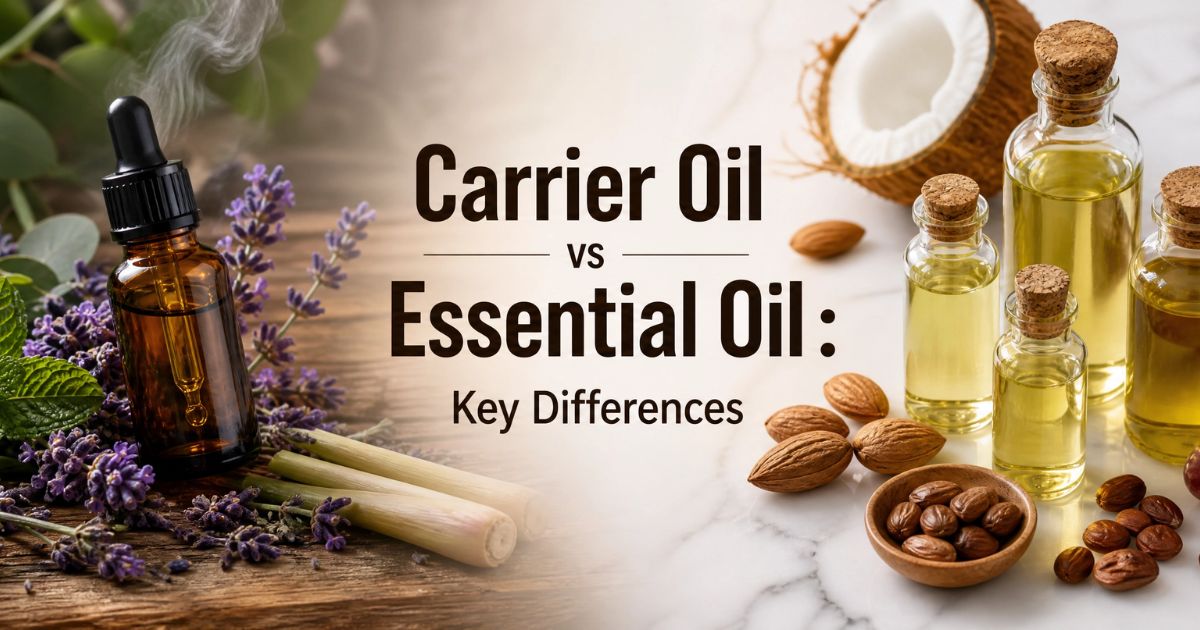
If you’ve ever picked up a bottle of lavender oil and wondered why it says “dilute before use” on the label, you’ve already brushed up against the carrier oil vs essential oil question. They’re always lumped together, but essential oils and carrier oils do totally different jobs. One is concentrated botanical power. The other keeps that power safe and usable on your skin. Mixing the two can cause irritation, wasted product, or oils that simply don’t work.
Whether you’re a spa owner, soap maker, wellness brand sourcing raw materials, or just somebody dabbling in aromatherapy at home, knowing the difference between essential oil and carrier oil will change the way you shop for and use oils. Let’s break it down properly.
What Exactly Is an Essential Oil?
An essential oil is a concentrated liquid pulled from a plant, usually through steam distillation or cold pressing. It carries the plant’s natural aroma and its active compounds. Think of it as the plant’s essence, condensed into a tiny bottle. It can take several kilos of raw plant material, sometimes far more, to produce just one bottle of pure essential oil, which is exactly why these oils are so potent.
Because of that potency, essential oils are almost never applied directly to skin. Peppermint, eucalyptus, citronella, lemongrass, these are all popular examples, and every single one of them needs to be handled with respect. This is one of the first things people learn in any essential oils vs carrier oils comparison, a few drops go a long way.
What Is a Carrier Oil? (Carrier Oil Meaning Explained)
A carrier oil is exactly what it sounds like, an oil that carries the essential oil onto your skin safely. In simple terms, the carrier oil meaning comes down to this: a mild, plant-based oil that dilutes and delivers a stronger oil without causing harm. Carrier oils come from the fatty parts of plants, like seeds, nuts, or kernels, extracted through simple pressing rather than distillation, which is why they’re much milder and safe to apply on their own.
Coconut oil, sweet almond oil, jojoba oil, and grapeseed oil are all common carrier oils. They don’t usually carry a strong scent of their own, which means they let the essential oil’s fragrance and benefits come through without fighting for attention.
The Difference Between Essential Oil and Carrier Oil
Both are oils, so they may appear similar on paper, but their methods of preparation and use are very different indeed. Here’s the difference between essential oil and carrier oil, point by point.
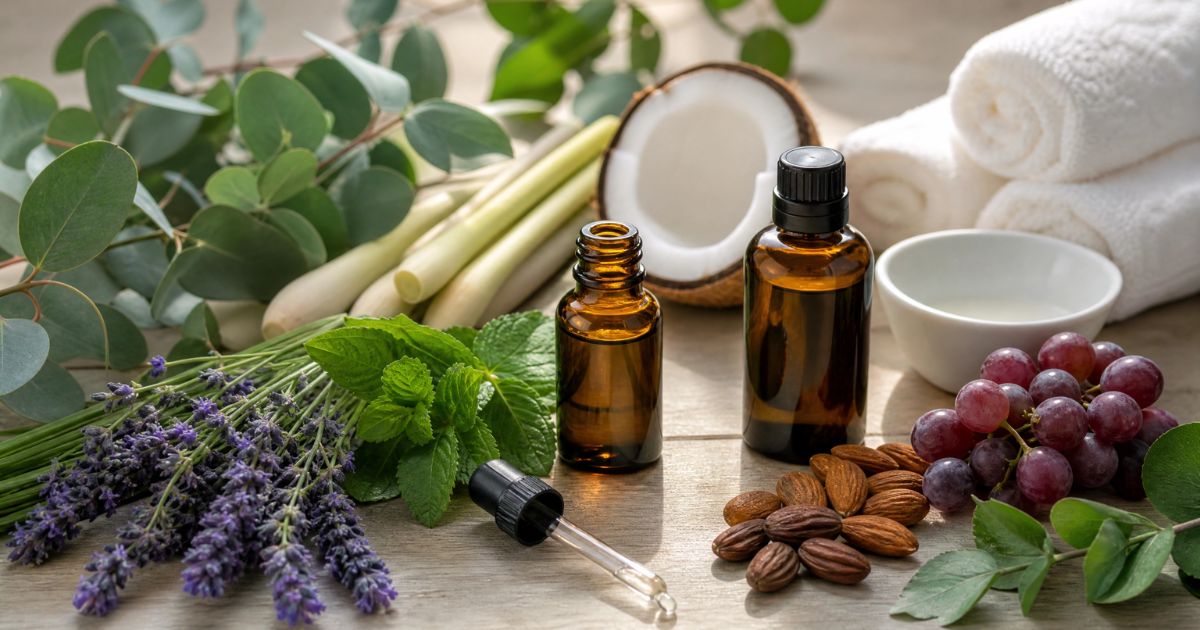
- Extraction method : Essential oils are extracted from flower petals, leaves, bark and peels by steam distillation or cold pressing. Carrier oils are extracted from nuts, seeds and kernels by pressing.
- Strength : Essential oils are very concentrated. Carrier oils are mild and safe for direct application to the skin.
- Scent : Essential oils have a very strong, distinctive smell. Carrier oils have little to no noticeable smell.
- Application : Essential oils always need dilution. Carrier oils act as that diluting base.
- Shelf life : Essential oils generally have a longer shelf life. Carrier oils are fatty, so they’re more prone to going rancid.
Once you see these points side by side, the essential oils vs carrier oils comparison becomes a lot clearer.
Why You Can’t Use Essential Oils Alone
Applying an undiluted essential oil straight to your skin sounds harmless, but it’s one of the most common mistakes beginners make. Because these oils are so concentrated, direct contact can cause redness, burning, or an allergic reaction, even with oils that are considered mild, like lavender. Diluting with a carrier oil isn’t an extra step to skip when you’re in a hurry, it’s what makes aromatherapy and skincare safe in the first place.
There’s also a practical reason to dilute, cost. Essential oils are expensive to produce, and a proper carrier oil blend helps the product go further without losing effectiveness, which is really what the carrier oils vs essential oils balance comes down to.
How to Pick the Right Carrier Oil
Not every carrier oil suits every purpose. Sweet almond oil is a gentle, all-purpose choice that works for most skin types and blends well with almost any essential oil. Jojoba oil is closer to skin’s natural sebum, so it’s a good pick for facial blends. Coconut oil is thicker and richer, better suited for body oils and hair care. Grapeseed oil is light and absorbs fast, which makes it popular in massage blends.
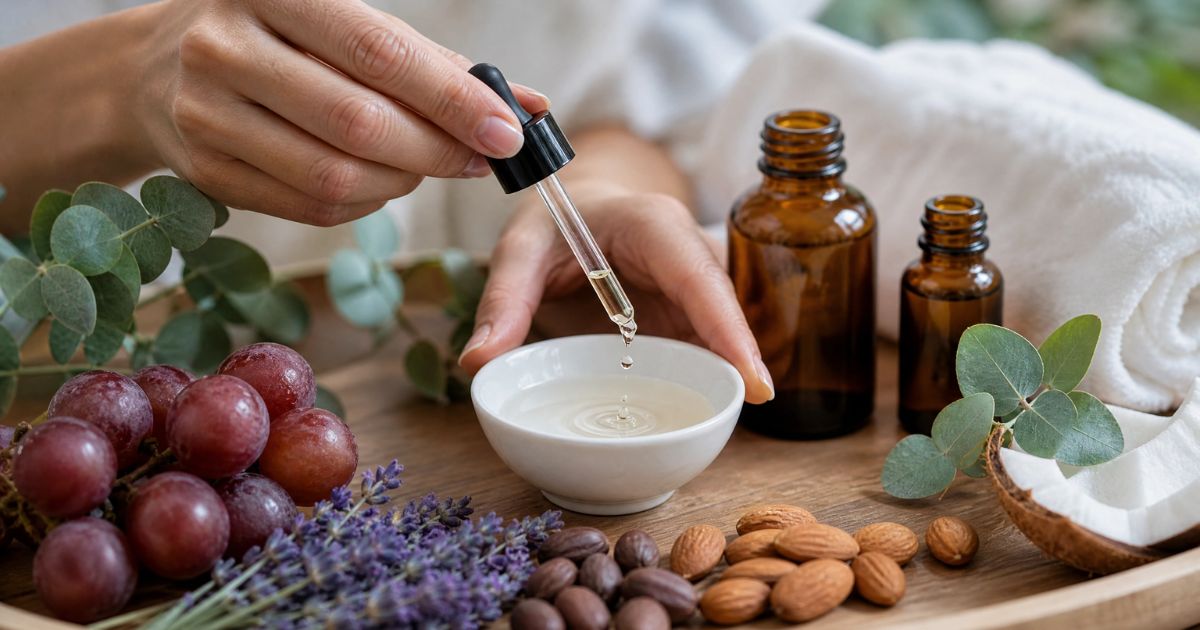
The general dilution rule for adults is around two to three drops of essential oil per teaspoon of carrier oil, though it can shift depending on the product. Getting this pairing right is what makes essential oils and carrier oils work so well together.
Why Sourcing Quality Oils Matters
Purity is everything, whichever side of this pairing you’re buying for. A diluted essential oil won’t give you the aroma or benefits you’re paying for, and a low-grade carrier oil can go rancid quickly or irritate sensitive skin. The source matters as much as the oils themselves.
Sakha International works directly with growers and distillers to bring you the purest, export-quality essential oils such as eucalyptus, citronella, lemongrass and peppermint, to businesses across the USA and beyond. Every batch is purity-tested before leaving the facility, so brands, formulators, and manufacturers can build their products on oils they can actually trust.
Frequently Asked Questions
Q1- What does carrier oil mean, exactly?
The carrier oil meaning is simple, it’s a plant-based oil, like almond or coconut, used to safely deliver essential oils onto skin.
Q2- Can I use any carrier oil with any essential oil?
Mostly yes, since carrier oils are neutral bases. But lighter oils like grapeseed suit face blends, while richer ones like coconut work better for body care.
Q3- Do carrier oils have their own benefits?
Yes, they moisturize and nourish skin on their own. Jojoba and almond oil, for instance, are valued for their skin-conditioning properties even without any essential oil added.
Q4- How long do carrier oils last once opened?
Most last six months to a year if stored in a cool, dark place. Oils like grapeseed spoil faster, while coconut and jojoba tend to last longer.
Q5- Is it safe to inhale essential oils without a carrier oil?
Yes, inhalation through a diffuser doesn’t require dilution. Carrier oils are needed specifically for topical, skin-contact use.
Q6- Where can businesses source bulk, export-grade essential oils?
Sakha International supplies bulk essential oils like citronella, lemongrass, eucalyptus, and peppermint to businesses across the USA with verified purity standards.
The Overall View
Essential oils and carrier oils are partners, not competitors. One brings the strength and the aroma, the other makes sure it reaches your skin safely. Knowing the difference between essential oil and carrier oil makes blending your own oils, or choosing a ready-made product, far less confusing, whether you’re weighing carrier oils vs essential oils for a homemade blend or sourcing in bulk.
Want pure, export-quality essential oils for your brand or business? Get batch after batch of oils that meet international purity standards from Sakha International.




Leave A Comment